
Mobile Casino Pay by Phone Credit in the UK
 Available in GB
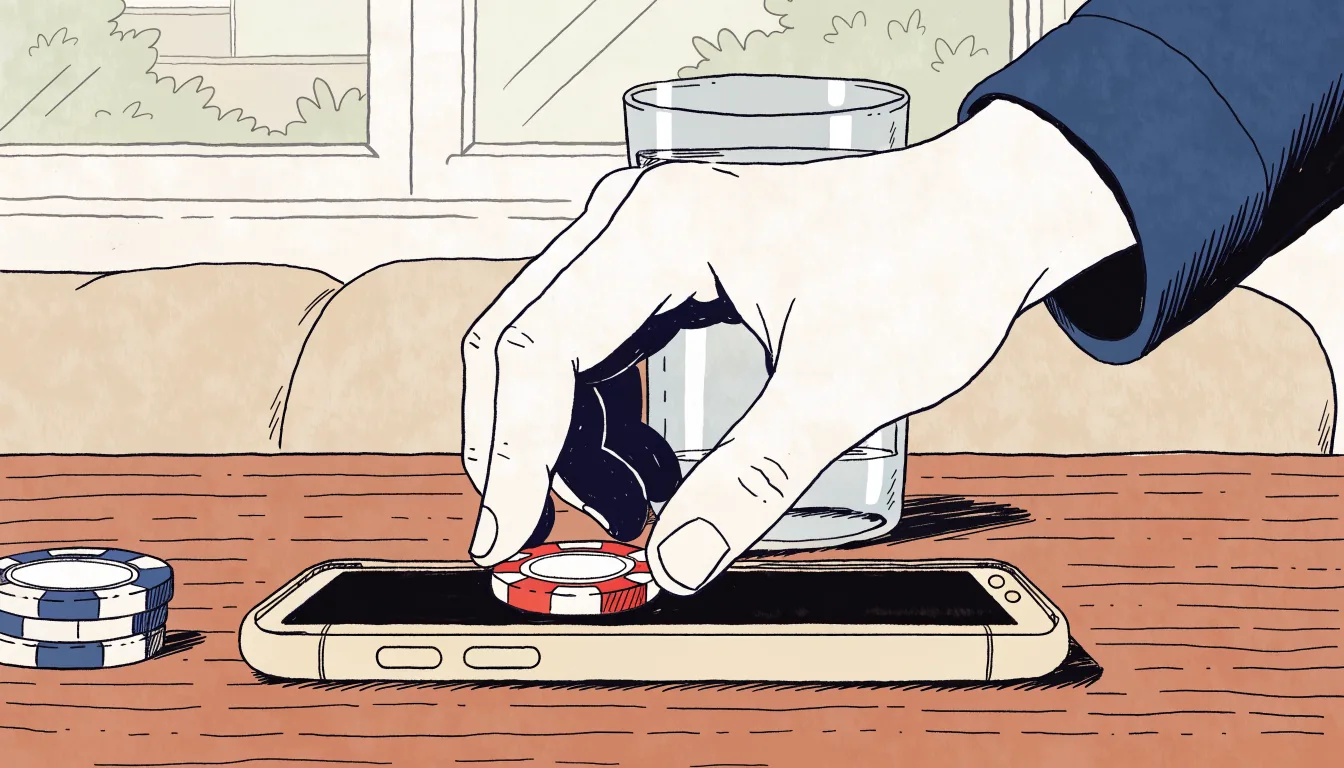
Pay by Phone routes a casino deposit through a mobile network, with the charge added to a contract bill or deducted from prepaid balance.
How Phone-Credit Casino Deposits Work
A Pay by Phone deposit sends the cost of a casino payment through the mobile network rather than taking it directly from a bank card. The charge is added to the next mobile phone bill for a contract account, or deducted from the available balance on a pay-as-you-go account. It is a payment for casino funds, not a top-up to the phone itself.
The route is straightforward in principle. A mobile casino must offer Pay by Phone at its cashier, and the customer selects that method before entering a deposit amount. The payment screen may request the mobile number, then send a confirmation prompt or code to the handset. The payment is completed only after the required confirmation. The precise screens depend on the operator and payment service, so the key check is that the final prompt shows the intended amount and that the casino account is the destination.
After approval, the payment provider passes the transaction to the casino. The deposited amount is credited to the gambling account, while the corresponding charge is recorded by the network. Contract customers see it on their next bill; pay-as-you-go customers lose the amount from their existing credit. The two arrangements differ in when the cost becomes visible, not in the fact that the payment is a real charge. A successful casino deposit does not create extra phone credit or change the balance available for calls and data.
The amount entered is not always the full cost
A specialist review describes Pay by Phone deposits in the £5–£30 range. That is a guide to the amounts a customer may encounter, not a fixed tariff or a promise that every casino accepts each value. The cashier’s available options determine what can be entered, and the network or payment service may also impose its own conditions. The amount shown immediately before confirmation should therefore be treated as the transaction amount, rather than relying on a remembered range.
Casino Guides: UK Deposit, Apps and Licensing
A separate cost can arise if the mobile network applies a premium-rate fee. One specialist review reports fees of £0.50–£1.50 for some Pay by Phone transactions. That charge is network-dependent, so it should not be assumed to apply to every deposit. Where it does apply, the total cost is the casino deposit plus the fee; the fee does not become additional casino funds. For instance, a deposit amount shown by the casino may be lower than the total ultimately billed if the network adds its own charge.
The distinction matters in both account types. On a contract plan, a network fee may appear alongside the casino payment on the bill. On pay as you go, the payment and any applicable fee reduce the available balance. If the remaining credit is insufficient for the full charge, the transaction may not complete. A payment can also fail if the mobile number cannot be used for the service or the required confirmation is not completed. In either case, the casino balance should not be treated as funded unless the deposit is shown as successful.
What to check before confirming
The final confirmation screen is the point at which the payment terms become concrete. It should identify the amount being charged and, where displayed, any additional fee. The handset confirmation should match the cashier’s figure. If the amounts differ, cancelling is safer than approving a charge that was not intended. A later bill is not a substitute for checking the transaction before authorisation.
The mobile bill or pay-as-you-go balance provides a second record after the payment. A casino account statement provides another: it should show whether funds were credited and the amount recorded.
The mobile bill or pay-as-you-go balance provides a second record after the payment. A casino account statement provides another: it should show whether funds were credited and the amount recorded. If the network shows a charge but the casino balance does not reflect the deposit, the relevant records are the transaction confirmation, the mobile account entry and the casino cashier history. Those details help distinguish a declined payment from a completed charge that has not appeared in the gambling account.
Pay by Phone is therefore best understood as a billing route with a casino deposit attached. The operator’s cashier sets the permitted deposit choices; the mobile network determines how the charge is collected and whether a separate fee applies. Neither the deposit amount displayed by the casino nor the availability of mobile credit, by itself, establishes the complete cost. The amount to assess is the confirmed casino payment together with any network charge, collected through the phone bill or deducted from prepaid credit.
Mobile Casino Payments: Phone Credit in Context
A mobile casino can offer several ways to fund an account, but “mobile payment” does not describe one consistent process. Phone credit, a debit card, Apple Pay and PayPal use different balances and checks. The practical comparison is not simply which button is quickest: it is where the money comes from, what may interrupt the transaction, and whether the payment stays in pounds.
Offshore Casino Sites: UK Licensing and Risks
Pay by Phone uses a mobile account or prepaid balance rather than a bank card or a separate payment wallet. That can suit someone who wants to keep a casino deposit apart from everyday card spending. The trade-off is that the deposit is tied to the network account or available pay-as-you-go balance. It is not a general-purpose payment method, and it should not be treated as interchangeable with a card or wallet.
Phone credit versus card payments
A debit card draws on a bank account. Specialist reviews describe debit-card deposits as generally appearing promptly, while noting that some banks may flag gambling transactions. That makes the card route dependent on both the casino’s payment set-up and the bank’s decision. A card can also be familiar for other online purchases, but that familiarity does not remove the possibility of a declined or queried payment.
Phone-credit payments instead place the cost on a mobile account or take it from prepaid credit. This separates the transaction from the bank-card balance, although it does not make the spend disappear: the charge still affects the amount due on the phone account or the credit left for other mobile use. For budgeting, the useful comparison is therefore the source of funds and how clearly the resulting charge can be tracked, not an assumption that one method is cost-free.
Apple Pay is another route available through some payment set-ups. A specialist review reported instant deposits in the apps it tested, completed with two taps. That is a report about those tests, not a promise that every casino, device or transaction will behave the same way. Its convenience comes from using a stored payment method; it does not make Apple Pay equivalent to Pay by Phone, because the underlying source of money is different.
Debit card
Draws on a bank account and may be flagged by banks.
Apple Pay
Uses a stored payment method for potentially instant deposits.
PayPal
Acts as a wallet layer and may involve currency conversion fees.
Wallets and currency
PayPal can provide a separate wallet layer between a casino account and a funding source. The relevant cost to check is currency: a specialist review notes that conversion fees may apply when play is conducted in a currency other than pounds sterling. Where the account and transactions remain in pounds, that particular conversion issue may not arise; where currencies differ, the exchange terms matter alongside the deposit amount.
The distinction is easy to miss when payment screens present several methods as equally simple buttons. A wallet can draw on linked funds, while phone credit is charged through the mobile account and a debit card draws on a bank account. The visible step may be similar; the route through which the money is accounted for is not.
| Method | Main source of funds | Point to consider |
|---|---|---|
| Pay by Phone | Mobile bill or prepaid credit | Spending affects the mobile account or remaining credit |
| Debit card | Bank account | A bank may flag a casino transaction |
| Apple Pay | Stored payment method | A specialist review found instant deposits in tested apps, completed in two taps |
| PayPal | Wallet and linked funding | Currency conversion fees may apply outside pounds sterling |
The table compares the funding route, not a ranking. Payment availability and processing can vary by casino and account, so the option shown at the cashier is the one that matters. A method described as instant in a review may not be available in every app, and a payment that is normally prompt can still be interrupted by a bank or other checks.
Choosing by the actual trade-off
For someone deciding whether to pay with phone credit at a mobile casino, the central question is whether charging a mobile account is preferable to using money held in a bank account or wallet. Pay by Phone can keep the deposit separate from card activity, but the mobile bill or prepaid balance becomes the record of that spending. A debit card keeps the transaction within the banking route, with the possibility of a bank flag. Apple Pay can reduce the number of steps in a tested app, while PayPal introduces a currency consideration if the transaction is not in pounds.
Online Casino No Registration UK: What It Means
None of these labels establishes that a method is universally faster, cheaper or better. The payment screen should be checked for the available route, displayed amount and currency before confirmation. Those details determine the transaction being authorised; the method’s name alone does not.
Our top casino picks for the UK
- BeOnBetBonus: 100% up to €500 + 100 FS · Payout speed: 1-3 business days
- AmunbetBonus: Join now and get 450% up to 2,700 GBP + 450 FS · Payout speed: 1-3 business days
- Revery PlayBonus: 100% up to€1,000+ 100 FS · Payout speed: 1-3 business days
- JetsetspinsBonus: 200% Bonus + 100 Free Spins + Free Royal Wheel · Payout speed: 1-3 business days
- ChanzeBonus: Slots Welcome Bonus #1 200% up to €500 · Payout speed: 1-3 business days
- BritsinoBonus: Welcome Package – Get your £2,200 + 2,000 FS · Payout speed: 1-3 business days
- DieselwinBonus: Welcome Pack 250% up to £4000 + 200 FS · Payout speed: 1-3 business days
- NightWinBonus: £900 + 400 free spins · Payout speed: 1-3 business days
- SlotoSportBonus: 500% up to £ 10 200+ 777 FS · Payout speed: 1-3 business days
Playing Casino Games on a Mobile Browser or App
Mobile access is part of the playing environment, not a payment feature. A casino may support Pay by Phone deposits while offering games through a browser, a dedicated app, or both. The funding route does not determine how the pages or games run. A working phone-credit option therefore says nothing by itself about how well a casino performs on a particular handset.
Most UKGC-licensed casinos offer instant play through mobile browsers. A browser session can open the casino without first installing a dedicated app. Games are delivered within the mobile site, so the experience depends on how the casino has built its pages and how the device handles them. “Instant play” means access without an app installation; it is not a promise that every screen will load at the same speed.
App vs Browser
An app might be a native wrapper or a WebView embed. A native wrapper can call device functions directly, whereas a WebView version might show a delay in interface responsiveness, such as a half-second delay in spin controls.
A browser can be the simpler route when the aim is to open a casino without adding software. An app, meanwhile, is not necessarily a fully native product. Some apps are wrappers around web content: the icon and app shell are native, but the game interface is displayed inside an embedded browser view. That architecture can affect responsiveness, even if the app looks like a conventional installed product.
The useful comparison is not simply “app or browser”. It is how the game itself is presented. A native wrapper can call device functions directly, while a WebView embed displays web content inside the app. A specialist review reported that, in its testing, a spin control in a native wrapper responded at the moment of touch, whereas a WebView version showed a noticeable half-second delay. That is a reported comparison, not a guaranteed timing for every casino, game, phone or software version. It does, however, identify one practical detail to check: how promptly an on-screen control responds.
A short delay can change the feel of a game without changing its rules or outcome. It may make a control seem less immediate, particularly when the interface expects repeated taps. It does not establish that apps or browsers are universally faster. A poorly optimised native wrapper can perform badly, while a well-built mobile site can feel smooth. The technical label is not a substitute for checking how the actual game behaves on the device.
Foreign Casinos for UK Players: Licensing Explained
Screen layout is another practical difference. Mobile pages rearrange menus, account controls and game windows to fit a narrow display. An app may keep its navigation in a persistent shell, while a browser casino may share space with the browser’s own bars and tabs. Either format can leave less room for the game. Crowded controls or overlays that obscure the screen are usability issues, not consequences of the payment method.
Browser play also makes it easier to move between sites without maintaining separate installations. An app may suit someone who uses the same device repeatedly, but installation alone does not establish better performance. The useful checks are whether the casino offers the same games and account functions in each format, whether the session remains responsive, and whether essential controls are easy to reach. Calling an app “faster” needs a defined basis; the presence of an app icon provides none.
Connection quality and device capability are separate factors. A slow connection can delay page assets or game content, while an older handset may handle animation less smoothly. Those effects should not be confused with the response of the spin control itself: a control may register a touch promptly even while the game takes longer to load, or the reverse. Separating these stages helps identify where a pause occurs.
Where the same game is available in both formats, comparing them on the device that will actually be used gives the clearest practical result. Check whether the game loads, the controls respond consistently and the layout remains usable. Another handset may behave differently, so results from it do not settle the question. A mobile casino that accepts phone-credit deposits can still provide a poor playing experience; a well-designed browser version can work adequately without an app. Payment acceptance and play quality are separate checks.
Play Quality
- Technical labels like “app” or “browser” do not guarantee speed.
- Connection quality and device capability are separate factors from software design.
- Comparing games on the actual device provides the clearest practical result.
Phone-Credit Deposits: Limits and Account Conditions
The amount accepted in a single Pay by Phone deposit is often constrained more tightly than the balance available on a mobile account. A specialist review of UK mobile casino payment terms reports that many operators set a ceiling of £30 per transaction. That is a reported pattern, not a universal rule: the limit can differ between casinos and may be displayed only after Pay by Phone is selected at the cashier.
The minimum can be just as relevant. A specialist review of casino app payment terms reports £5 as a common minimum deposit, with some apps accepting £2. These figures describe reported app conditions, not a guaranteed range for every phone-credit deposit. The casino’s payment screen sets the applicable amount. Where its stated minimum is higher than the available phone-credit balance, the payment cannot be completed as planned; where the transaction ceiling is lower than the intended deposit, the excess cannot be included in that single payment.
A per-transaction cap should not be confused with a personal deposit limit. The first restricts the size of one payment through a particular method. The account-level limit controls how much can be deposited over a chosen period, potentially across more than one payment method. Reaching the Pay by Phone ceiling does not necessarily mean the account has reached its overall deposit limit, and staying below the transaction cap does not by itself keep total deposits within a budget.
Online Casinos with No Sister Sites in the UK
Account limits are separate controls
UK Gambling Commission rules require licensed operators to make deposit limits available in account settings. These can be set daily, weekly or monthly. They are an account control, rather than a special feature of phone-credit payments, so the same limit can matter when other deposit methods are used.
That distinction affects how a planned amount should be assessed. The amount requested in a phone-credit transaction must fit within the method’s own cap; the total deposited during the selected period must also remain within the account limit. If either condition fails, the payment may not proceed. A series of smaller payments does not change the operator’s account-level controls.
The practical calculation is therefore based on two separate ceilings: the amount allowed per Pay by Phone transaction and the remaining allowance under the account’s deposit limit. The lower available amount determines what can be deposited at that point. An account limit may already have been partly used before a phone-credit payment is attempted, so the payment method’s advertised maximum is not necessarily the amount still available.
Minimums need the same separation. A casino can require a particular minimum for one deposit method while the account’s broader limit is set independently. If the remaining account allowance is below the method minimum, there may be no amount that satisfies both conditions. The payment screen and the account settings show different parts of the restriction; checking only one gives an incomplete figure.
Do
- Check the selected payment method’s minimum and maximum.
- Verify the remaining daily, weekly, or monthly account allowance.
Don’t
- Rely on “no-deposit” searches to bypass deposit conditions.
- Assume a promotional offer removes standard account limits.
No-deposit searches do not remove deposit conditions
A search for a pay-by-phone casino with no deposit can refer to an offer that does not require an initial payment, rather than to a phone-credit transaction with a zero minimum. Those are different arrangements. A deposit method’s minimum applies when a deposit is being made; an offer that requires no deposit does not, by that description alone, establish that the casino accepts phone-credit payments or remove account conditions.
Where a payment is required, the displayed minimum, transaction ceiling and remaining account limit still determine whether it can be submitted. Where an offer is described as no-deposit, its own terms determine what is available. A label cannot substitute for the actual conditions.
Before relying on a particular figure, the relevant checks are the selected payment method’s minimum and maximum, followed by the remaining daily, weekly or monthly account allowance. These controls answer separate questions: how much one phone-credit payment may contain, and how much more can be deposited into the account during the period selected.
Using Phone Credit for Casino Play: What the Balance Can Cover
A phone-credit payment is a way to fund a casino account; it is not a separate form of play. Once the payment has been accepted and credited, the balance sits in the account and can be used for casino games that the operator makes available to that account. The mobile network handles the charge, while the casino account records the funds. Those are distinct steps, and acceptance of the payment method does not establish that every game can be played with it.
Casino Sites Not on GamStop: UK Rules and Risks
This distinction matters when comparing a mobile casino using phone credit with a service that advertises a particular game. Pay by Phone describes how money reaches the account, not which titles appear in the lobby or whether a specific title is eligible for play. Game availability is determined by the operator’s catalogue and account conditions. The payment route alone cannot confirm access to a named slot, table game or live casino game.
The same applies to mobile slots using phone credit. If a casino accepts a Pay by Phone deposit, that does not mean all of its slots are included or that a separate phone-credit version exists. The deposit adds funds to the casino balance; the game catalogue remains a separate part of the service. Checking the cashier is therefore not a substitute for checking the games available after signing in.
There is also no universal rule that a casino using phone credit will offer the same selection as another casino using the same payment method. Operators set their own catalogues and account terms. A method that works for one account or operator should not be treated as evidence that it will work across the market. Nor does a game being visible on a mobile screen prove that the chosen payment route is accepted for that operator.
Pay by Phone describes how money reaches the account, not which titles appear in the lobby or whether a specific title is eligible for play.
The distinction can be expressed simply: payment method answers how an account is funded; the casino lobby answers what can be played. For anyone assessing whether they can pay using phone credit for casino play, both points need to be considered independently. The account balance may be available for eligible games, but the payment method does not grant access to every title or override the operator’s conditions.
Online casinos are legal in the UK when they operate within the applicable licensing system. That legal status does not turn phone credit into a guarantee of universal game access. A mobile casino using phone credit in the UK remains an operator-specific service: payment acceptance and game availability are separate checks, and neither should be inferred from the other.
Phone-Credit Slots and the Rules of Play
Using phone credit to fund a casino account does not create a separate category of slot play. Pay by Phone is a payment route; the slot rules are determined by the rules applying to the operator and the game, not by whether the deposit was charged to a mobile bill or deducted from prepaid credit.
For mobile slot play in Britain, the maximum stake per game cycle is £5 for customers aged 25 and over. For customers aged 18 to 24, it is £2. The £5 limit for adults took effect on 9 April 2025. These caps apply to a spin’s stake, not to the amount deposited through phone credit. A smaller payment does not lower the legal stake limit, and a larger balance does not permit a stake above it.
Best International Casinos for UK Players: What to Know
Online slot autoplay is banned in Britain. Each spin must last at least 2.5 seconds, so a player cannot use an autoplay setting to run through a sequence of spins. That remains true whether the slot is opened on a phone or another device, and regardless of the deposit method. A payment choice cannot override rules built into the regulated game.
This distinction matters when assessing phone-credit slots in the UK. The payment transaction may feel separate from the game, but once funds reach a gambling account, the same slot controls apply as for other deposits. The practical check is therefore two-part: confirm that the casino accepts the chosen payment route, then assess the game against the applicable stake and play rules. Acceptance of phone credit is not evidence that a game has different limits.
Slot terms can also be easy to misread when a site describes play as mobile-friendly or highlights a particular payment method. Neither description changes the stake cap or the minimum spin duration. A compliant slot cannot shorten the required spin time because it is played on a handset, and phone-credit funding does not make autoplay permissible.
The useful distinction is simple: payment governs how money enters the account; regulation governs how a slot can be played. Any claim that phone credit unlocks faster spins, removes stake restrictions or permits autoplay conflicts with the rules that apply to online slots in Britain.
Choosing a Phone-Credit Casino Within UK Rules
Online casinos are legal in the UK when they operate under the required local regulation. A mobile casino offering Pay by Phone is not exempt from that rule: the payment option does not establish that the operator is legitimate, and the presence of a UK-facing website is not proof of a UK licence.
Legitimacy Check
- Locate the UKGC licence number at the bottom of the homepage.
- Verify the operator’s identity on the official UKGC register.
For real-money gambling offered to customers in Great Britain, the operator must hold the relevant UK Gambling Commission licence. This applies whether the business is based in the UK or elsewhere. A UK Gambling Commission licence is the strongest consumer protection available in this market because it places the operator within the UK regulatory system. A casino outside that system does not provide the same safeguards.
The practical check is the UKGC licence number, shown at the bottom of the casino’s homepage. It should identify the operator behind the site, rather than simply appear as a badge or a claim in promotional copy. The number can then be checked against the UKGC register. If the operator’s identity or licence status cannot be established there, the phone-credit payment option adds no reassurance.
This distinction matters because “mobile casino phone credit” describes a way of paying, not a legal category. A site may display Pay by Phone among its deposit methods and still lack the authorisation required to serve customers in Great Britain. Payment convenience and operator legitimacy are separate checks; one cannot stand in for the other.
A licensed casino must also be assessed as the company named on its licence, not merely by the appearance of its mobile site or the wording of its terms. Where a brand directs customers to a different operating company, that entity should be consistent with the licence information. The check is administrative, but its result determines which regulatory framework applies if a dispute arises.
UK Online Casino Payouts: Understanding RTP and House Edge
In the UK, legal online casino play is tied to a current UKGC operating licence. Establishing that status before making a deposit is therefore a basic eligibility check, not a preference between brands. A phone-credit casino is within the UK rules only when the operator itself meets that licensing requirement.
Paying by Phone Credit: The Charge Is Not a Withdrawal Route
Paying into a mobile casino by phone credit can simplify the deposit, but it does not create a matching cash-out channel. A phone-credit payment is charged to a mobile bill or deducted from a pay-as-you-go balance; that transaction does not establish where winnings can be sent.
For UK-licensed operators, the deposit method is almost always the method required for withdrawals. That makes the payment choice relevant beyond the initial charge. Before depositing, the casino’s cashier terms should be checked for the available withdrawal routes and any alternative method required if the original one cannot receive funds. Pay by Phone may be accepted for deposits while being unavailable for payouts. The account balance and the destination for a withdrawal are separate parts of the transaction.
E-wallet withdrawals provide a useful comparison, but timing should not be treated as guaranteed. A specialist review of UK-licensed operators describes under 24 hours as a realistic benchmark for e-wallet payouts; that is a reference point, not a promise for a particular account or withdrawal. Operator checks and processing conditions can affect when funds arrive.
Attention Pay by Phone may be accepted for deposits but could be unavailable for withdrawals. Always check the cashier’s withdrawal rules before playing.
The practical calculation is therefore not just the amount deposited. It also includes whether the chosen payment route can be used again for withdrawal, what alternative the operator permits, and how long that route may take. If a deposit is made through phone credit, the cashier’s withdrawal rules should be understood before play begins. A quick funding method can still leave the later cash-out dependent on a different payment service.
No-Deposit Offers and Phone-Credit Slots: Read the Terms as a Calculation
A no-deposit offer is not guaranteed simply because a mobile casino accepts Pay by Phone. The payment route and the promotion are separate conditions: an offer may be unavailable, or its rules may exclude particular games or account types. Phone-credit slots therefore need to be assessed against the promotion’s terms, not treated as a way around them.
The key calculation is the wagering requirement. A specialist review describes bonus requirements in the 35x to 40x range, but each offer’s own terms determine the actual figure and what it applies to. If wagering is attached to the bonus, the required play is calculated from that bonus amount; if the terms include the deposit as well, the starting base is different. That distinction can materially change the amount of play required before any balance becomes withdrawable.
The time limit matters just as much. Some offer terms allow only 72 hours, while others provide 7 to 14 days. The clock, qualifying games and any maximum bet condition should be read together: a headline bonus has little value if the remaining conditions cannot be met before expiry.
A cashout cap can then limit the result even after wagering is completed. A specialist review reports caps of £100 to £200 on many bonuses, but the figure for a specific promotion must be confirmed in its terms. If eligible winnings exceed that cap, the excess may not be withdrawable.
Non-GamStop European Casinos: UK Player Guide
The useful comparison is therefore not the advertised bonus alone. It is the amount available after the wagering requirement, game restrictions, deadline and cashout cap have all been applied. A no-deposit label describes how an offer begins; it does not describe the final cash amount.
Phone-Credit Deposits, Bonuses and Player Protection
A phone-credit deposit and a bonus should be assessed as separate transactions. The deposit adds funds to the casino account; an offer may attach conditions that affect whether winnings can be withdrawn. Before accepting, the terms should be checked for eligibility, wagering requirements, time limits and any cap on cashout. A headline bonus is not the same as cash available to withdraw.
Financial controls apply regardless of the payment method. UK Gambling Commission rules require licensed operators to provide deposit limits, with daily, weekly or monthly settings available in the account. New customers must also be prompted to set a financial limit before their first deposit. A limit set before funding turns the intended budget into a control rather than a note made after the money has gone.
If a withdrawal that meets the operator’s terms is withheld, the first step is the operator’s internal complaints process. The operator must belong to an approved alternative dispute resolution provider, a requirement in force since October 2023. If the complaint is not resolved internally, it can be escalated to that provider. The UKGC register can be used to confirm that the operator is licensed; the licence is central to having these protections and complaint routes.
Terms and account controls do not make every offer worthwhile. The useful figure is the amount that remains withdrawable after conditions are met, not the promotional value displayed before them. A payment route does not replace those checks: the deposit, the offer conditions and the complaint process each have their own terms.
Are there any fees for using phone credit?
Some mobile networks add a premium-rate fee of £0.50–£1.50 to a Pay by Phone deposit. Check the final confirmation screen for any extra charge before approving the payment.
Can I set deposit limits on mobile?
Yes. UK-licensed casinos must offer deposit limits, which you can set daily, weekly or monthly in your account settings.
Is it safe to use pay by phone at online casinos?
Yes, provided you use a UKGC-licensed casino. Check its licence number at the bottom of its homepage; a UK Gambling Commission licence is the strongest consumer protection in the market.
Why can’t I withdraw to my phone credit?
Because withdrawals almost always have to go back through the same payment method used to deposit, and phone credit is a deposit route rather than a general-purpose payout method.
Can I play instantly without downloading an app?
Yes. Most UKGC-licensed casinos offer instant play through a mobile browser, so you can play without downloading an app.
Casino Guides
3 Pound Minimum Deposit Casinos in the UK
A £3 cashier minimum is only the entry point; game stakes, account rules and payment methods shape what happens next. What a £3 Deposit Can—and Cannot—Do A £3 deposit is…
Trusted UK Casino: How to Assess a Casino’s Trust
A practical assessment of UK licensing, enforcement, player protections, reviews and terms…
£2 Minimum Deposit Casinos in the UK: What to Check
A low cashier minimum is only one condition; bonus qualification, payment methods…
Offshore Casino Sites: UK Licensing and Risks
Understand how UKGC licensing, bonus conditions and withdrawal terms affect the risks…
Written by the editors at StakeVault.