
Curaçao Casino Licence in the UK: What It Means
 Available in GB
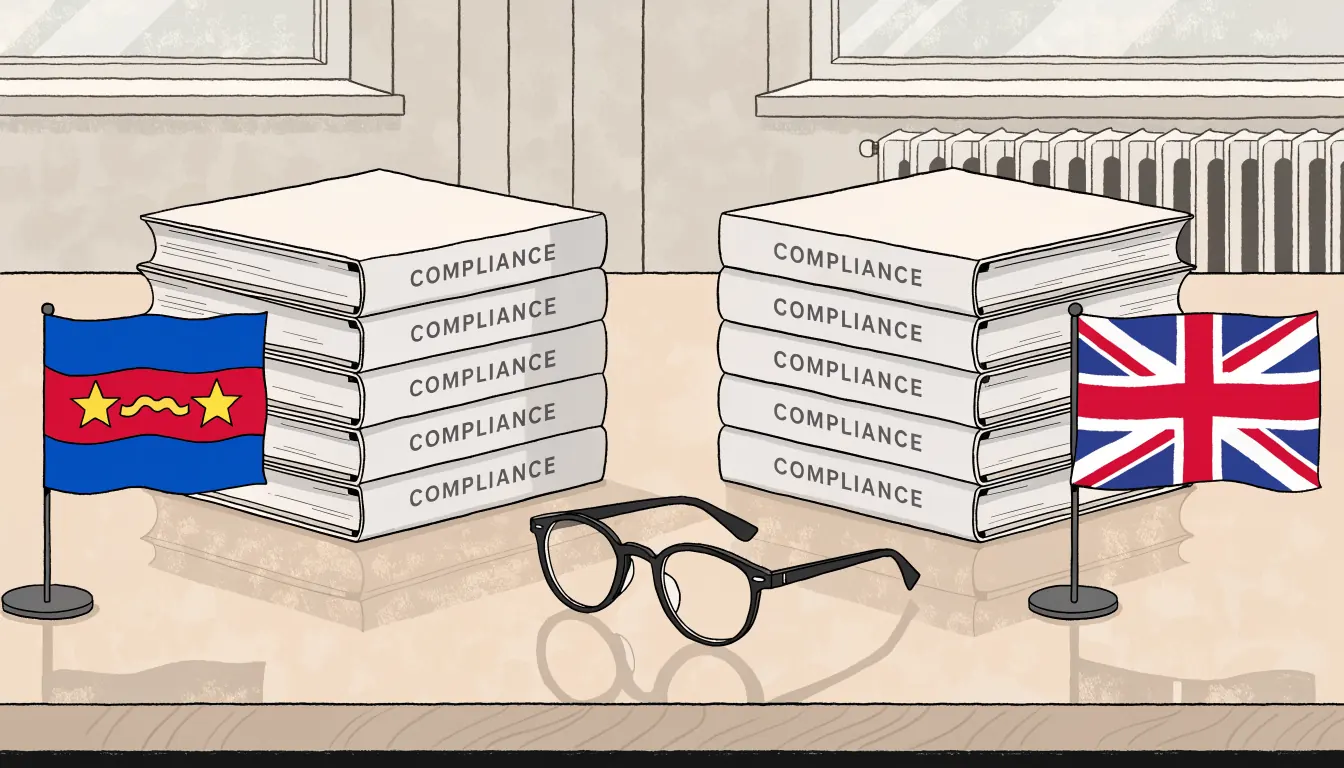
A Curaçao licence reflects regulation outside the UK system and does not replace the UK Gambling Commission licence required to serve Great Britain.
What a Curaçao Casino Licence Does—and Does Not—Mean
A Curaçao gambling licence indicates that an operator is authorised under a regulatory framework based in Curaçao. It is not a UK Gambling Commission licence, and the two do not carry the same meaning for a casino serving customers in Great Britain.
The relevant distinction is the market being served, not where a company is incorporated or runs its business. Operators that offer gambling to customers in Great Britain need a UK Gambling Commission licence, regardless of their base of operation. A licence issued in Curaçao does not replace that requirement or establish permission to serve the British market.
“Licensed” therefore needs a jurisdiction attached to it. A Curaçao gaming licence identifies a regulatory basis outside the UK system; it does not put the operator under UK Gambling Commission oversight. Non-UK-regulated casinos are online gambling sites operating without that Commission’s oversight. The label describes a regulatory position, not a guarantee that the site meets UK requirements.
That distinction also limits what can be inferred from the licence alone. It does not establish that a casino has a UK operating licence, or that UK regulatory protections apply to its customers. Nor does the word “Curaçao” by itself establish which legal entity operates the site. Those are separate questions from the broad fact that an operator holds, or claims to hold, permission from a regulator elsewhere.
Casino Guides: UK Deposit, Apps and Licensing
For a UK-facing casino, the decisive regulatory point is whether it holds the required UK Gambling Commission licence. An overseas licence may describe the operator’s status in another jurisdiction; it cannot do the work of a British licence. Treating the two as interchangeable turns a location detail into a permission it does not provide.
Our top casino picks for the UK
- BeOnBetBonus: 100% up to €500 + 100 FS · Payout speed: 1-3 business days
- AmunbetBonus: Join now and get 450% up to 2,700 GBP + 450 FS · Payout speed: 1-3 business days
- Revery PlayBonus: 100% up to€1,000+ 100 FS · Payout speed: 1-3 business days
- JetsetspinsBonus: 200% Bonus + 100 Free Spins + Free Royal Wheel · Payout speed: 1-3 business days
- ChanzeBonus: Slots Welcome Bonus #1 200% up to €500 · Payout speed: 1-3 business days
- BritsinoBonus: Welcome Package – Get your £2,200 + 2,000 FS · Payout speed: 1-3 business days
- DieselwinBonus: Welcome Pack 250% up to £4000 + 200 FS · Payout speed: 1-3 business days
- NightWinBonus: £900 + 400 free spins · Payout speed: 1-3 business days
- SlotoSportBonus: 500% up to £ 10 200+ 777 FS · Payout speed: 1-3 business days
Curaçao Casinos Online: What the Label Tells UK Players
“Curaçao casino” is a market label for an online gambling site associated with the island’s licensing jurisdiction. It describes a connection to regulation outside the United Kingdom; it does not, by itself, establish that the site holds permission to serve customers in Great Britain. The label is therefore narrower than a promise about who may use the site, what protections apply or how a dispute would be handled.
Curaçao is one of several jurisdictions associated with non-UK-regulated casinos. Others include Malta, Gibraltar and Anjouan. These locations form part of the wider international market for online gambling, but they do not represent a single regulatory system. A site’s country of licensing is one part of its identity, not a standard shared by every operator based there.
Gibraltar Casino Licence in the UK: What It Means
That distinction matters because terms such as “Curaçao casino” and “Curaçao online casino” can sound more definite than they are. They indicate an offshore regulatory association, not that every site using the label has the same ownership, operating arrangements or customer terms. Nor does the phrase turn a foreign licence into a UK Gambling Commission licence. The regulatory category remains non-UK-regulated.
What the label does not establish
The label alone does not tell a UK-based player whether a particular operator is authorised to serve the British market. It also does not establish that the operator follows the UK’s rules or that a UK regulator can resolve a complaint about it. Those are separate questions from the site’s association with Curaçao.
A list described as “Curaçao casino sites” can also group together operators with different brands and business arrangements. The shared label is not evidence that they offer identical games, terms or safeguards. “New” or “top” in a description does not add regulatory meaning either: age and ranking language cannot substitute for knowing which jurisdiction oversees the operator.
This is why a broad category should not be mistaken for a quality rating. “Best Curaçao online casinos” may be used as a general description, but the word “best” has no regulatory force. It does not show that an operator is safer, that its terms are clearer or that its service is suitable for someone in Britain. Those claims would need to be assessed separately rather than inferred from the location in a site description.
“Curaçao casino” is a market label for an online gambling site associated with the island’s licensing jurisdiction, but it does not establish that the site holds permission to serve customers in Great Britain.
Where UK players fit
The legal position should be described carefully rather than reduced to the claim that a British player commits an offence merely by using an overseas gambling service. UK law does not expressly bar British citizens from using gambling services licensed abroad, and playing on a site without a UK licence is not itself a criminal offence for the player. That does not make every overseas site a lawful option for serving the British market, or give it UK regulatory status.
The operator’s position and the player’s position are different matters. A Curaçao association says something about the operator’s claimed or stated regulatory setting; it does not settle the legal obligations that apply when services are offered to customers in Britain. For that reason, “Curaçao casinos UK” is not a distinct UK licence category. It is a description of foreign-linked sites considered in relation to a British audience.
The same applies to “UK Curaçao casinos” and other variations of the phrase. They may suggest that the operator accepts customers from the UK, but acceptance is not proof of approval by a UK regulator. A site’s availability to a person and its authority to supply gambling services in a market are not interchangeable facts.
Non-UK Licence Casinos: Rules and Protections
The useful reading is restrained: Curaçao identifies one jurisdiction in the wider offshore market. It does not certify a site as UK-regulated, establish the protections available to its customers or determine the operator’s right to serve Great Britain. Those distinctions prevent a geographical label from doing more work than it can support.
How Curaçao Casino Licensing Relates to UK Law
A Curaçao licence and the legal position of a person in Britain answer different questions. The licence concerns an operator’s relationship with the jurisdiction that issued it. UK law, meanwhile, places the central obligation on operators that supply gambling services to the British market: they must hold the relevant UK Gambling Commission licence. An overseas licence does not replace that requirement.
The Gambling Act 2005 focuses on the supply side. Its target is an operator providing gambling services into the UK market, rather than a customer who uses the service. That distinction matters when considering Curacao casinos online: the operator’s regulatory position cannot be inferred from the player’s nationality, and a foreign licence does not by itself establish permission to serve customers in Britain.
For individuals, the position is narrower than a simple claim that every use of an overseas gambling service is a criminal offence. UK law does not expressly bar British citizens from using gambling services that are licensed elsewhere. Nor does a player commit a criminal offence under UK law simply by gambling on a site that lacks a UK licence.
Regulatory Distinction
UK law does not expressly bar British citizens from using gambling services licensed abroad, but an overseas licence does not grant an operator permission to supply the British market.
That does not make the operator’s position equivalent to a UK-licensed business. The absence of a criminal offence for the player does not grant the operator permission to supply gambling services in Britain, and it does not turn a Curaçao casino licence into a UK Gambling Commission licence. The operator and the individual customer are subject to distinct legal considerations.
This distinction also applies to Curacao crypto casinos and Bitcoin casinos licensed in Curaçao. The payment method does not change the UK requirement placed on an operator serving the British market. A crypto deposit does not convert an overseas authorisation into domestic permission, just as a player’s use of the service does not shift the operator’s licensing obligation onto that player.
The practical legal summary is therefore two-sided: operators supplying gambling services into Britain need the UK licence, while an individual’s use of an overseas gambling service is not, on that account alone, a criminal offence. These statements should not be collapsed into a broader claim that an overseas licence authorises UK-facing operations or that all legal questions about a particular service are settled by the player’s lack of criminal liability.
Curaçao-Licensed Online Casinos and UK Access
A Curaçao licence identifies an operator’s regulatory base; it does not, by itself, establish that the operator may serve customers in Great Britain. The relevant distinction is between a licence issued outside the UK and the permission required to offer gambling to people in the British market. These are separate regulatory questions, not two descriptions of the same status.
Casino Without a UK Licence: What It Means
A non-UK-regulated casino operates without oversight from the UK Gambling Commission. That remains true even where the operator holds a foreign licence or describes its services as available internationally. A Curaçao licence therefore cannot be treated as a substitute for a UK Gambling Commission licence, nor does the word “licensed” alone settle whether the site is authorised to serve someone in Great Britain.
For operators serving customers in Great Britain, the rule applies regardless of where the business is based: a UK Gambling Commission licence is required. Moving the company’s headquarters or licensing jurisdiction abroad does not change that requirement. The location of the regulator named on a casino’s website and the market the operator is serving are different parts of the picture.
That distinction matters when a site appears accessible from the UK. A functioning registration page, a choice of pounds sterling, or a payment option that works from Britain would show only that the site can be used technically. None of those features establishes that its operator holds the licence required to serve the British market. Access and authorisation are not interchangeable.
The same applies to real-money play and cryptocurrency. A site may offer casino games for money or accept digital assets, but the payment method does not alter the operator’s regulatory position. A Curaçao-licensed crypto casino is still a non-UK-regulated casino for UK regulatory purposes if it operates without UK Gambling Commission oversight. The currency or transfer route does not create a local licence.
Access vs Authorisation
Attention A site being technically accessible from the UK does not mean its operator holds the licence required to serve the British market.
The phrase “Curaçao-licensed online casinos accepting UK players” can therefore describe a site’s apparent availability, not proof of permission to serve Great Britain. A site may be reachable from the UK while falling outside the UK regulatory system. Its own wording about international customers cannot replace the licence required for operators serving the British market.
This is also why a list of Curaçao-licensed sites, even if it names operators accurately, would not answer the separate question of UK authorisation. A foreign licence and a UK Gambling Commission licence have distinct functions. One cannot be inferred from the other, and a site’s willingness to accept a UK-based customer does not change that distinction.
For a UK-based player, the practical limit is straightforward: Curaçao licensing alone says nothing conclusive about whether the operator is authorised to serve Great Britain. The country of issue is not a portable permission to operate in every market. Regulatory status must be understood in relation to the territory being served, not just the licence displayed by the casino.
Curaçao Casinos Outside GamStop: What Changes for Players
GamStop is the UK Gambling Commission’s self-exclusion scheme. A casino that is outside it does not receive or apply a player’s GamStop exclusion through that scheme. That distinction matters because a break registered with GamStop does not create a block across every gambling site that may be accessible from Britain.
Curaçao casinos outside GamStop are therefore not an alternative route within the UK system; they sit outside that particular safeguard. The same is true of other non-UK-regulated casinos: they are not part of the UKGC self-exclusion scheme. A Curaçao licence, where a site claims to hold one, does not make the site a GamStop participant. The licence label and the self-exclusion arrangement are separate matters.
USA Casinos for UK Players: Access and Licensing
What self-exclusion does—and does not do
GamStop is designed to prevent access to participating gambling operators after a person registers for self-exclusion. It cannot impose that restriction on a casino that is not connected to the scheme. A person who has excluded through GamStop may therefore find that the exclusion applies at UKGC-licensed sites but does not stop access to non-UK-regulated casinos.
This is the central protection gap. The restriction is not a universal online block, and it does not automatically carry over to every site described as a Curaçao casino for UK players. A site outside the scheme may still be reachable, but reachability should not be mistaken for the continuation of a UK self-exclusion measure. The practical boundary is the scheme’s participating operators.
Nor does a casino become “regulated by GamStop”. GamStop is a self-exclusion service, not a gambling regulator or a licence. Casinos not signed up to it are simply outside its coverage. That wording describes the connection to the scheme; it says nothing by itself about the quality of the operator’s other controls.
The safeguards that may be absent
The consequences extend beyond whether an account can be accessed. Non-UK-regulated casinos may apply less stringent responsible-gambling and data-protection rules than operators licensed by the UK Gambling Commission. The protections built into the UK regulatory framework should not be assumed to follow a player to a casino licensed elsewhere.
Protection Gap
Players using offshore casinos forfeit access to the UK’s Financial Ombudsman Service and to mandatory responsible-gambling tools.
Players using offshore casinos also forfeit access to the UK’s Financial Ombudsman Service and to mandatory responsible-gambling tools. In practical terms, a person cannot rely on those UK protections as though the casino were a UKGC-licensed operator. If an operator does not offer a particular control, the fact that a player has used GamStop does not make that control appear on the site.
This matters for people seeking a firm barrier rather than a reminder or a voluntary setting. A self-exclusion arrangement is only effective across the operators it covers. If access to gambling is the concern, a site that is not part of GamStop may leave a route open precisely where a person expects the exclusion to close one. That is a structural limitation, not a technical loophole that the scheme can resolve on the casino’s behalf.
Is a Curaçao casino safe or legal in the UK?
“Safe” needs a precise meaning here. A Curaçao association does not establish that a casino participates in GamStop, provides the UK’s mandatory responsible-gambling tools, or gives access to UK complaint routes. Non-UK-regulated casinos may have weaker responsible-gambling and data-protection requirements than UKGC-licensed operators, so the presence of an overseas licence should not be treated as a substitute for those UK protections.
Merkur Casino Online UK: Games, Rules and Checks
The legal position is also separate from the self-exclusion question. Operators offering real-money gambling to customers in Great Britain must hold a UK Gambling Commission licence. A casino’s accessibility from the UK does not establish that it is authorised to serve the British market. Equally, a player’s use of an overseas gambling service is not the same legal question as an operator’s duty to hold a British licence. The relevant point for this section is that an overseas casino does not become part of GamStop by accepting or appearing to accept UK-based customers.
For someone who has registered with GamStop, treating a non-participating Curaçao casino as a continuation of the UK system would be a costly category error. The exclusion may not apply there, and UK safeguards cannot be presumed to travel with it. A site’s own responsible-gambling options, if offered, are not the same thing as a mandatory UK tool or a system-wide exclusion.
The practical distinction is straightforward: GamStop covers participating operators, while Curaçao casinos outside the scheme are not covered by that exclusion. That gap should be considered before any account is opened or used, particularly where self-exclusion was chosen to prevent further gambling.
How to Check a Curaçao Casino Licence
A licence claim is useful only if it can be connected to the company operating the casino. The check is not a search for a badge or a familiar regulator’s name; it is a comparison of identities. A logo in a website footer does not establish that the operator named in the terms holds the licence being advertised.
Licence Verification
- Identify the legal company name in the terms and conditions
- Compare the company name with the name attached to the licence claim
- Check if the licence details identify a specific operator
- Verify if the licence wording is exact rather than generic
Start with the legal company name given in the casino’s terms and conditions. Compare it with the name attached to the licence claim, and note whether the site identifies the same entity as the operator. If those names differ, the site should explain the relationship. A brand name alone is not enough to make that link.
Then look for the licence details presented by the casino and assess whether they identify a specific operator, rather than merely referring to Curaçao or to licensing in general. Keep the wording exact. “Licensed in Curaçao” is a claim; it does not, by itself, identify who holds the licence or whether it covers the site in question.
A Curaçao casino licence check should therefore be treated as an identity check, not as a substitute for assessing the operator’s position. Non-UK-regulated casinos operate without oversight from the UK Gambling Commission. A foreign licence claim does not turn that casino into a UKGC-regulated service.
If the company name, licence details or explanation of the operator relationship cannot be matched consistently, the claim remains unsubstantiated. That does not prove that a licence is false; it means the information available on the site does not establish the connection. The distinction matters: a polished badge can be displayed at negligible cost, while accountability depends on identifying the company behind it.
Record the operator name and the exact licence wording shown, rather than relying on a screenshot of a logo or a generic statement. Those details make it possible to compare what the site claims with the entity named in its terms. Where the two do not align, the licence should not be treated as verified.
Curaçao Casino Sites: Why a Named List Cannot Be Verified Here
A list headed “Curaçao casinos” can look more definite than the label warrants. Non-UK-regulated casinos may be licensed in several jurisdictions, including Curaçao, Malta, Gibraltar and Anjouan. That shared category does not establish that every site grouped under a Curaçao label has the same operator, licence status or regulatory position.
A named list is only useful if its entries can be tied to the relevant operator and a current licence. Without that connection, a site appearing on a directory or review page is not proof that it holds a Curaçao licence. Nor does the word “licensed” in a casino’s own description settle which company is covered. A label can be copied; the underlying details are what matter.
This distinction also limits what a list of Curaçao slot sites can tell a player. A game catalogue or a page featuring a particular slot says little about the licence held by the business taking deposits and processing withdrawals. The casino brand, its operating company and the entity named in licensing information may not be interchangeable. Treating them as one item is an easy way to make a list look verified when it is not.
Why lists vary
Lists of Curaçao casinos may group together operators with different brands, business arrangements, and regulatory standings. A shared label is not evidence of identical games, terms, or safeguards.
Casino reviews have a similar limitation. They may describe games, payments or promotional terms, but a favourable review does not itself confirm a licence. Review pages can also become outdated as operators change names, ownership or terms. A recommendation without current, matching licensing details is an assessment of a site, not confirmation of its regulatory status.
For UK readers, a Curaçao licence claim should not be mistaken for UK authorisation. A casino licensed outside the UK is not thereby licensed by the UK Gambling Commission to serve customers in Great Britain. A list cannot remove that distinction, and inclusion on one does not amount to an endorsement or a finding that a site is suitable for UK customers.
The practical result is narrow: a directory may be a starting point for identifying names, but the list itself cannot establish which entries have a valid Curaçao licence. Naming casinos as verified choices without checking the relevant operator and licence would turn a category into a recommendation the evidence does not support.
Bonuses, Deposits and Withdrawals: The Terms Behind the Headline
A headline bonus is not the same as withdrawable money. For a Curaçao casino offer, the financial terms sit in separate layers: the amount that must be deposited, the wagering base, eligible games, any time limit and the maximum cash-out. The final value depends on all of them, not on the size of the welcome figure.
Deposits: the method is only half the transaction
Non-UK-regulated casinos may accept credit cards, e-wallets, bank transfers and cryptocurrency, sometimes using alternative payment processors. The available methods can differ by operator and may change. A deposit route does not establish that the same route can be used for a withdrawal: payment rules, identity checks and account conditions can differ between paying in and cashing out.
More permissive deposit policies may mean fewer restrictions, while a payment method can still bring its own processing steps. The useful comparison is therefore not simply whether a method appears on the cashier page. It is whether the casino permits withdrawals to that method, what verification it requires, and whether additional terms apply. Without those details, a fast deposit says little about when funds can be retrieved.
Withdrawal speed and the amount released
Non-UK-regulated casinos may process payouts faster and apply fewer restrictions than UK-regulated operators. However, faster processing is not a fixed outcome. Reported estimates disagree: one account gives a range from 24 hours to five business days, while another warns that a withdrawal may take three or four weeks. There is no single timeline that can safely be applied across operators or payment methods.
The distinction between processing and receipt matters. An operator may review a request before releasing it, while a bank or payment provider may add its own handling time. A stated estimate is not the same as a guaranteed arrival date, and a delay can affect the full balance rather than just a bonus.
Wagering Calculation
Step 1: Identify the base
Determine if the multiplier applies to the bonus only, or the deposit and bonus combined.
Step 2: Apply the multiplier
Multiply the chosen base by the wagering requirement (e.g., 40x).
Step 3: Factor in additional rules
Account for game contribution rates, expiry conditions, and any maximum withdrawal caps.
Some specialist reviews report that particular non-UK-regulated casinos set daily, weekly or monthly withdrawal ceilings. Where such a ceiling applies, a large balance may be paid in instalments instead of one transfer. The applicable limit and schedule need to be read as terms of the specific offer or account, not treated as a standard feature of every casino.
Verification can also affect the final timing. Some specialist reviews describe operators requesting notarised documents or a video call before approving a withdrawal. These are reports about particular cases, not a universal procedure. Still, a payout remains conditional until the operator has accepted the requested checks. A supported deposit method, a visible balance and a submitted withdrawal request do not by themselves establish that the funds will be released immediately.
Welcome bonuses: calculate the wagering base
A wagering requirement states how much qualifying play must occur before bonus-related funds can be withdrawn. Specialist reviews report offshore welcome offers with requirements of 35 times or more. Another reported structure uses a 40-times multiplier, but the base can vary: it may be the bonus, the deposit and bonus combined, or the bonus together with free spins. That difference changes the amount of play required substantially.
For instance, where an offer applies 40 times to a bonus of £20, the wagering target is £800. If the same multiplier applies to a £20 bonus plus a £20 deposit, the target is £1,600. Those figures describe the arithmetic, not the terms of any particular offer. The offer rules determine which amount is multiplied and which games count toward completion.
A bonus can therefore look larger while carrying a higher qualifying-play target. It can also become unusable if the qualifying period expires before the requirement is met. The relevant calculation is the multiplier times its stated base, followed by any game contribution rules, expiry conditions and withdrawal cap. The headline amount is only the starting entry in that calculation.
Online Casino Malta MGA Licence in the UK: Rules
Free spins: winnings may have a second set of conditions
Free spins do not necessarily convert winnings into cash that can be withdrawn at once. Specialist reviews report that winnings may face wagering requirements of 30 to 50 times the winnings, alongside cash-out caps of £5 to £50. These terms vary by offer and should not be read as guaranteed market-wide limits.
A cap can make the maximum payable amount lower than the amount shown in the account. If winnings are subject to a wagering requirement, the required play applies before withdrawal; if a cap also applies, completing the requirement does not remove that ceiling. The order of operations is simple: establish the winnings, identify the wagering base and multiplier, then check the maximum withdrawable amount.
Specialist reviews also report that free-spin packages may expire within 24 to 72 hours. An expiry condition can reduce the practical value of the offer even when the spins themselves are described as free. The remaining time, eligible games and treatment of winnings all belong in the calculation.
Compare the amount that can leave the account
A useful comparison separates the deposit, bonus credit, required wagering, possible cash-out cap and payment route. It also distinguishes the operator’s stated payout estimate from the time a payment provider may take. A bonus that requires substantial qualifying play or restricts the amount withdrawable can have a lower practical value than its headline suggests.
Terms can change, and the conditions displayed for an offer may be narrower than the promotional description. For any Curaçao casino online offer, the controlling details are the current rules attached to that promotion and the account’s payment terms. The deposit is certain once charged; the bonus is conditional, and the final payout remains subject to both wagering and withdrawal rules.
Are sites that are not on GamStop legal for players in the UK to access?
Yes, UK law does not explicitly prohibit British citizens from using gambling services licensed abroad, and players do not commit a criminal offence by using an unlicensed site. However, operators serving customers in Great Britain need a UK Gambling Commission licence, and sites outside GamStop do not provide the scheme’s self-exclusion protections.
Can UK players legally play at casinos licensed in Anjouan?
Yes, UK law does not explicitly prohibit British citizens from using gambling services licensed abroad, and players do not commit a criminal offence by gambling on an unlicensed site. An Anjouan licence does not authorise the casino to operate in the UK.
What happens if I have a dispute with an Anjouan-licensed casino as a UK player?
The Anjouan authority does not mediate or decide player complaints, and these casinos are not required to offer an independent dispute-resolution process comparable to UKGC-approved services. The operator must respond to a complaint within 30 calendar days, but UK players do not have the UK regulatory protections or dispute routes available with a UKGC-licensed operator.
Are non UK regulated casinos legal for UK players to use?
Yes, UK law does not explicitly prohibit British citizens from using gambling services licensed in other countries, and players do not commit a criminal offence by using an unlicensed site. But operators offering gambling to customers in Great Britain need a UK Gambling Commission licence; an overseas licence does not replace it.
Casino Guides
Non-UK-Regulated Casinos: UK Rules and Risks
The distinction between UKGC authorisation and overseas licensing shapes the protections and legal position relevant to casinos serving Great Britain. What UK Gambling Commission Regulation Covers The UK Gambling Commission…
Casinos That Bypass GamStop: What the Term Means
GamStop exclusion applies at participating UKGC-licensed businesses; a casino outside the scheme…
Safe Online Casinos in the UK: Licence and Checks
A practical guide to operator status, verification, payment checks and the limits…
British Casinos Not on GamStop: Licensing Explained
GamStop coverage depends on UKGC licensing, while a site's availability in Britain…
Prepared by the StakeVault editorial staff.