
Hi-Lo Casino UK: How the Higher-or-Lower Game Works
 Available in GB
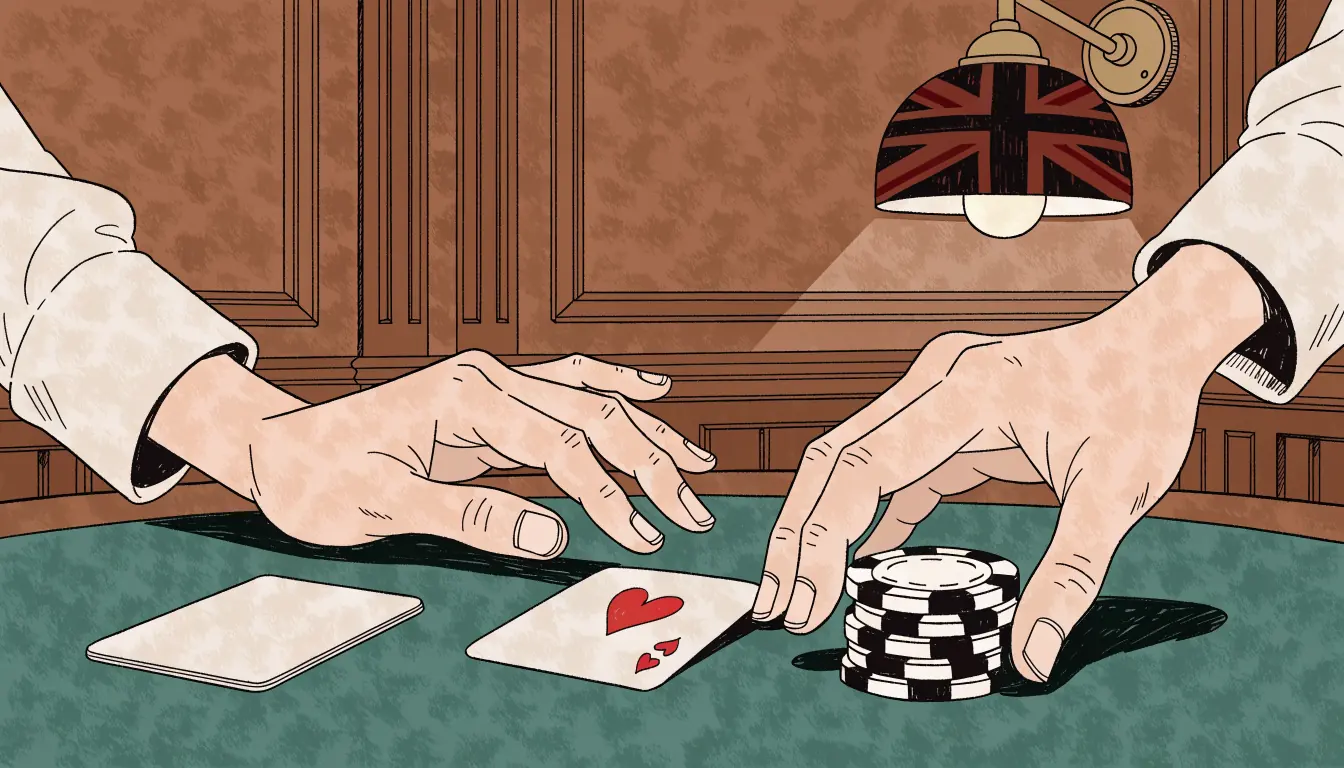
Hi-Lo games share a higher-or-lower premise, but the values, choices and outcomes depend on each version’s rules.
How Hi-Lo Casino Games Work
Hi-Lo is a broad label for a higher-or-lower guessing game. At its simplest, a player sees a value and predicts whether a value revealed next will be higher or lower. That description explains the central idea, not a confirmed set of rules for any particular casino game. The values, available choices and consequences of a guess can differ, so the name alone is not enough to establish how a specific version works.
The distinction matters before any money is involved. A familiar premise can make a game appear self-explanatory, while the rules that determine a round’s outcome remain specific to its implementation. A player considering an online version needs to establish what the game presents, what counts as a correct prediction and what happens after each choice. Without those details, there is no sound basis for estimating the chance of success or the financial result.
The basic idea
The higher-or-lower format compares a value already shown with one that has not yet been revealed. A prediction concerns their relative order: the next value is expected to be above or below the visible one. The game’s central decision is therefore comparative rather than a choice among many outcomes.
That outline leaves important questions open. The source of the values is not established by the name. Nor does the label confirm whether equal values are possible, how a tie is treated, or whether the player has an option other than choosing higher or lower. Those details can change the meaning of a prediction. If a rule for ties is unclear, for instance, the effect of selecting either direction cannot be assessed fully.
JetX Casino Game in the UK: Categories and Play
The same caution applies to the word “round”. A game may present decisions in a sequence, but the label by itself does not confirm how many decisions are offered, whether a player can stop between them, or what happens when a prediction is wrong. These are not minor presentation details. They define the point at which a result is recorded and any associated balance changes.
What to establish before playing
A careful review begins with the rules for the exact game, rather than assumptions drawn from another higher-or-lower game. The following points form a practical reading order:
- Identify the value being compared. The instructions should make clear what the displayed value represents and what the next value will be compared against.
- Check the available predictions. Confirm whether the choice is limited to higher or lower, and whether any other outcome or decision is included.
- Read the treatment of equality. The rules should say what happens if the visible and next values match, if matching values are possible.
- Trace the result of a choice. Establish what the game records after a correct or incorrect prediction and whether the sequence continues, ends or offers another decision.
- Find the money terms. Before play, the relevant rules should explain any stake, payout, balance adjustment or other financial consequence. The game’s name does not supply those terms.
- Check when a decision becomes final. The instructions should make clear whether a selection can be changed and when the game resolves it.
This is not a claim that every version includes each feature in the same form. It is a checklist for separating rules that are actually stated from details that might otherwise be assumed. If the instructions do not explain a point that affects the outcome or the balance, the game cannot be evaluated on that point.
Understanding the financial outcome
A higher-or-lower decision is not a complete financial calculation. A prediction may be correct or incorrect, but the financial effect depends on the game’s stated terms. The same outcome label could have different consequences under different rules. Without a disclosed payout or balance rule, there is no basis for calculating a return from the choice.
The sequence also matters. If a game allows decisions to build on earlier results, its instructions need to explain how the running outcome is treated. If the player can end a sequence, the rules need to clarify what is retained at that point. These questions cannot be answered from the general premise. A description that says only “guess whether the next value is higher or lower” does not establish when money is won, lost, carried forward or settled.
A theoretical chance of making a correct guess cannot be inferred from the format alone. It depends on the values available, their distribution, and the rules for ties and other outcomes.
For the same reason, a theoretical chance of making a correct guess cannot be inferred from the format alone. It depends on the values available and their distribution, as well as the rules for ties and any other outcomes. No probability should be assigned without those inputs. A compact game description may convey the entertainment idea while leaving the arithmetic unresolved; the arithmetic is what determines whether a financial claim is meaningful.
Online presentation does not settle the rules
An online version puts the game on a screen, but that description does not identify its mechanics. The visual display may make the current value and the available choice apparent, yet presentation is not a substitute for rules. Clear buttons do not explain how a tie is resolved, and an animated reveal does not specify the financial result of a prediction.
Before starting, the relevant information is the game’s own explanation of its outcomes and money terms. Where a rule is central to deciding whether to continue, it should be available before that decision is made. If a screen shows the choices but does not make their consequences clear, the apparent simplicity is not enough to establish the cost or result of play.
Best Video Slots UK: Games, Features and Play
There is also a difference between understanding the general concept and understanding a particular game. The first requires only the idea of comparing one value with another. The second requires the rules that connect a selection to an outcome and that outcome to the balance. Treating those as the same thing is a short route from a simple guess to an unexplained result.
Hi-Lo therefore describes a format, not a complete set of instructions. The higher-or-lower premise is easy to state; the mechanics and financial terms must be confirmed for the individual game before they can be assessed.
Our top casino picks for the UK
- BeOnBetBonus: 100% up to €500 + 100 FS · Payout speed: 1-3 business days
- AmunbetBonus: Join now and get 450% up to 2,700 GBP + 450 FS · Payout speed: 1-3 business days
- Revery PlayBonus: 100% up to€1,000+ 100 FS · Payout speed: 1-3 business days
- JetsetspinsBonus: 200% Bonus + 100 Free Spins + Free Royal Wheel · Payout speed: 1-3 business days
- ChanzeBonus: Slots Welcome Bonus #1 200% up to €500 · Payout speed: 1-3 business days
- BritsinoBonus: Welcome Package – Get your £2,200 + 2,000 FS · Payout speed: 1-3 business days
- DieselwinBonus: Welcome Pack 250% up to £4000 + 200 FS · Payout speed: 1-3 business days
- NightWinBonus: £900 + 400 free spins · Payout speed: 1-3 business days
- SlotoSportBonus: 500% up to £ 10 200+ 777 FS · Payout speed: 1-3 business days
Live Hi-Lo: What the Online Casino Format Means
The word “live” can describe a presentation format, while “online” describes how a game is accessed. In a Hi-Lo search, those ideas may appear together, but the wording alone does not establish that a particular live version exists, how it operates, or which company offers it. Those are separate claims and need separate evidence.
For a player considering an online casino, the distinction matters because a game title does not identify its delivery format. An online listing might refer to a digital game, a live-hosted product, or simply use “live” as part of its label. Without a confirmed product page and its terms, the label cannot be treated as proof of a live dealer, a broadcast, a particular interface, or any other feature.
Online vs Live
Online casino play takes place through a service accessed remotely. “Live” is a narrower description that commonly signals a real-time presentation, but the word on its own does not verify what is being presented.
“Live” is not the same as “online”
Online casino play takes place through a service accessed remotely. “Live” is a narrower description that commonly signals a real-time presentation, but the word on its own does not verify what is being presented. A page headed “live Hi-Lo” is not enough to establish that a human host is involved, that the game is streamed, or that its outcomes are handled in a particular way.
The reverse distinction is equally important. A Hi-Lo game being available online would not, by itself, make it a live game. The broad online category says where the service is accessed; it does not settle how a specific game is displayed or run. Treating the two terms as interchangeable turns a label into a feature claim.
That distinction affects the information needed before assessing a product. A verifiable description would need to identify the game and its operator, explain the format, and connect those claims to an official product or operator source. In the absence of that material, statements about a live host, a studio, a stream, game speed, rules, or technical operation would be speculation.
What can be established about the UK setting
The UK Gambling Commission regulates gambling in the United Kingdom, including online casino activity. It is the sole regulator for commercial gambling in Great Britain. Its remit for remote gambling offered to consumers in Great Britain does not depend on where the operator’s key equipment is located.
Best High RTP Slots UK: How Returns Really Work
That regulatory context applies to the service and operator, not to the meaning of the word “live”. A live presentation is not a separate assurance about the game’s availability, quality, or operation. Nor does describing a product as an online casino game establish who supplies it or whether a particular version is offered to players in the UK.
The distinction between the game label and the operator’s status is practical. A product description may make claims about format; the regulator’s role concerns gambling activity and the businesses operating within the relevant market. One kind of information cannot substitute for the other. A live-style label does not confirm the operator’s regulatory position, and a regulatory reference does not verify the product’s features.
Reading live-game descriptions carefully
A useful description separates confirmed details from promotional language. It should make clear which operator is responsible for the service and identify the particular game being described. It should also state what “live” means in that product’s context, rather than relying on the label to carry the explanation.
If a page says only “live Hi-Lo”, the reader cannot infer a presenter, a camera feed, a studio setting, the use of physical cards, or any specific way of determining outcomes. These features may sound like natural implications of “live”, but implication is not confirmation. The same restraint applies to claims about how quickly rounds occur, whether the format differs from a digital version, or what conditions govern play.
Attention A page headed "live Hi-Lo" is not enough to establish that a human host is involved, that the game is streamed, or that its outcomes are handled in a particular way.
A listed title also does not establish that the game is currently available. Availability can depend on the operator and the market in which the service is offered. A page that does not identify the provider or state the relevant market cannot support a reliable conclusion about access in the UK. The product name alone leaves those points unresolved.
The same caution applies to comparisons. A description calling one option “best” needs a defined basis: comparable products, substantiated features, and evidence for the ranking. Without those elements, “best live Hi-Lo casino” is a judgement without an auditable calculation. A polished title does not supply the missing inputs.
Online access does not confirm a live product
The phrase “Hi-Lo online casino” can refer broadly to seeking this type of game through an online casino. Adding “live” narrows the intended format, but it still does not identify a verified title or supplier. The wording expresses what someone is looking for; it is not evidence that the requested product is available.
This is why the terms should be read as separate questions. Is there a named Hi-Lo product? Is its format described by an accountable source? Is the operator identified? Does the information apply to the UK market? Each question requires its own support. A single page heading cannot answer all of them.
The available information does not confirm a named live Hi-Lo game, provider, or operator offering. It also does not establish product mechanics or the conditions attached to any such game. No claims about a live version’s features, pace, fees, eligibility, or promotional terms can therefore be drawn from the phrase alone. Where a product cannot be identified, a comparison of its terms cannot be calculated either.
Chicken Road Casino Game in the UK: Formats and Risks
That is not a technical distinction for its own sake. A decision based on an assumed live format can be materially different from one based on an online game with no verified live component. The label may affect expectations about presentation, but it does not demonstrate how the game works or what a player would actually encounter.
The practical reading
A live Hi-Lo listing should be treated as a description to verify, not as a complete product specification. The operator’s own information would need to support the format claim and identify the relevant game. The UK regulatory framework provides context for gambling businesses serving the market; it does not certify every word used in a game title.
Until a specific product is substantiated, the accurate description is limited: “live” signals the format being sought, while “online” indicates remote access. Neither term independently confirms a particular game, provider, or set of mechanics. That boundary keeps an appealing label from being mistaken for a deliverable feature.
Hi-Lo Casino Sites: What Can Be Verified in the UK
A casino’s willingness to display a Hi-Lo game does not, by itself, establish that the operator may offer gambling to customers in Great Britain. The relevant check is the operator’s regulatory status. The UK Gambling Commission issues operating licences to businesses, while personal licences apply to individuals who perform specified roles in the industry. For a player assessing a casino, the business’s operating licence is the material point.
Regulatory Status
The relevant check for a player is whether the business holds a current UK Gambling Commission operating licence.
The Gambling Commission is the regulator for commercial gambling in Great Britain, including remote gambling offered to people there. Its remit does not depend on where an operator keeps its equipment. A site based abroad can still fall within the UK licensing requirement when it offers remote gambling to consumers in Great Britain. A foreign address, therefore, does not settle the licensing question.
Check the operator, not the game label
“Hi-Lo” describes a type of game, not a regulatory category that gives a casino permission to operate. The game’s name, a page devoted to it, or a claim that it is available to British players cannot substitute for a licence held by the business providing the gambling service.
The practical verification is whether the operator holds a current UK Gambling Commission operating licence. The Commission’s public register is the place to confirm that status. The business name shown on the casino site should be matched against the licence information, rather than relying only on a logo or a general statement that the site is regulated. If the trading name differs from the legal name, the relationship should be clear in the operator’s own licensing information and in the register.
A personal licence is not the same thing as an operating licence. The Commission issues personal licences to individuals as well as operating licences to businesses, but an individual’s licence does not establish that a casino company is authorised to provide gambling. The check concerns the company responsible for the site and the gambling service.
Plinko Casino UK: Games, Rules and Real-Money Play
What the licence check establishes
A valid operating licence is a concrete regulatory fact. It indicates that the business is licensed by the UK regulator for relevant gambling activity; it does not verify every claim made on a game page. In particular, it does not independently establish that a particular Hi-Lo title is available, how it works, or what terms apply to it. Those are separate questions and require evidence about the specific game and offer.
The distinction matters because a site can use familiar casino language without that wording proving its regulatory position. A game listing is content. A licence is an authorisation held by an operator. Treating the first as proof of the second confuses the product with the business permitted to offer it.
The check should also be made against the operator that actually accepts the account and handles the gambling service. A page may present a brand prominently while identifying a different company in its legal or account information. The licence needs to correspond to the responsible business, not merely to a name that appears in promotional material.
A narrow but useful test
For a UK casino presenting Hi-Lo, the licensing question can be stated plainly: does the business operating the site hold the relevant UK Gambling Commission operating licence? The answer should come from the public register and match the operator identified by the site. If the match cannot be established, the site’s presentation of the game is not a substitute for verification.
Do
- Match the business name against the UK Gambling Commission public register.
- Verify the legal name of the operator.
Don’t
- Rely solely on a logo or a general statement that the site is regulated.
- Assume a personal licence covers the company’s authority to provide gambling.
This test has limits. It does not rank casinos, certify the quality of a game, or confirm that a particular version is currently offered. It establishes whether the operator has the required local regulatory status for gambling offered to consumers in Great Britain. That is a necessary check on the business, not a complete assessment of the product.
The distinction between a licensed company and an individual licence also prevents a misleading shortcut: a named person’s credentials cannot stand in for the company’s authority to run an online casino. Conversely, the presence of a game label cannot stand in for either. Regulatory status attaches to the operator’s permission to provide gambling, and that permission is what the register is used to verify.
For anyone assessing a Hi-Lo casino site in Great Britain, the useful evidence is therefore specific: the operating company and its current UK Gambling Commission licence. Everything else on the page remains a separate claim to assess.
Choosing a Hi-Lo Casino Without a Verified Shortlist
A “best” label is useful only when it rests on evidence that can be compared. For a Hi-Lo casino, that would mean identifying the actual game and operator, then checking the terms and features relevant to the choice. That leaves no sound basis for ranking one casino above another or recommending a particular site.
Online Bingo UK: Tickets, Games and Real-Money Play
This matters because a casino’s general reputation cannot establish that it offers the specific game being sought. Nor does a page mentioning Hi-Lo prove that the game is available to customers in Great Britain, or that the page’s other claims have been checked. A label such as “top choice” does not supply the missing comparison; it merely gives an unsupported conclusion a confident heading.
What a meaningful comparison would require
A usable comparison starts with an identifiable product. The game name alone is not enough: a comparison needs to connect the game to the operator offering it and to the conditions attached to that offer. Without those links, claims about quality, value or suitability cannot be tested.
The next step is to establish what is actually being compared. “Casino” can refer to an operator, a website, an app or a selection of games. A site may offer casino games without offering the particular Hi-Lo game in question. A review may discuss a general casino experience while saying little about whether the named game is available. These are different claims, not interchangeable evidence.
Terms would also have to be examined rather than assumed. A claim about value depends on the conditions that apply to the game or account. Those details cannot be filled in with common industry practice: a plausible term is still not a confirmed term.
The same applies to comparisons between online and live options. The words “live” and “online” identify different ways a service may be presented, but they do not establish which operators provide a particular Hi-Lo product or how their offers differ. Without named, verified options and comparable conditions, a ranking would have no measurable basis.
A polished table or grid can make information look comparable even when entries have not been confirmed on the same basis.
Why “best” is not a measurable result
A ranking needs a stated measure. It might compare a defined feature, but only where reliable information exists for each option.
That makes several familiar review labels especially weak. “Best overall” does not specify what was measured. “Best for live play” implies verified live options and a relevant comparison. “Best value” requires known terms and a defensible way to calculate value. Without that evidence, each phrase presents a judgement as though it were a result.
A table does not solve the problem. A polished grid can make information look comparable even when entries have not been confirmed on the same basis. If one row describes a general casino and another refers to a game page, the layout does not turn them into equivalent offers. Formatting is not verification.
The label “recommended” carries the same limitation. A recommendation should follow from substantiated details about the product and the basis for preferring it. Where the relevant details are not established, naming a preferred casino would be an unsupported endorsement rather than a conclusion from comparison.
Separate the operator from the game claim
The operator and the game are separate parts of the decision. An operator may be identifiable while a particular game claim remains unconfirmed. Conversely, a page may use the name Hi-Lo without establishing which business is responsible for the offer. A useful assessment requires both sides to be clear.
Best High-Volatility Slots UK: How They Work
The distinction also applies to providers. A software-provider name can help identify a game only if the association is verified. The same restraint applies to game versions: no specific version can be treated as confirmed merely because it appears in a title or description.
Names matter because they make claims checkable. Without a named casino, game and responsible operator, there is no concrete offer whose features can be examined. General claims about “leading sites” or “trusted casinos” do not close that gap. They avoid identifying the thing being assessed.
The legal baseline is not a ranking
In Great Britain, businesses offering remote gambling to consumers fall within the UK Gambling Commission’s licensing framework even when their key equipment is located elsewhere. The Commission issues operating licences to gambling businesses and personal licences to individuals involved in operating gambling in Great Britain. For online casino customers, the relevant distinction is therefore whether the operator holds the required UK licence.
That legal baseline serves a different purpose from a comparison. It helps establish whether an operator is authorised to offer gambling in the market; it does not establish that the operator offers Hi-Lo, that its game is preferable, or that its commercial terms represent better value. A licence is not a quality score. Treating it as one would confuse permission to operate with evidence about a particular product.
Legal Framework
- The Gambling Act 2005 provides the principal framework in England, Wales and Scotland.
- Online gambling in the UK is lawful for adults aged eighteen and over via licensed sites.
- A licence confirms the legal status of a service but does not guarantee the quality or presence of a specific game.
The Gambling Act 2005 provides the principal gambling-law framework in England, Wales and Scotland. Northern Ireland is outside that Act’s scope. This does not turn a general legal description into a recommendation for a particular casino; the product and operator still need to be identified before any specific comparison can be made.
Online gambling in the UK is lawful for adults aged eighteen and over when it takes place through a site holding the relevant UK Gambling Commission licence. That condition concerns the legal status of the service. It does not establish the presence of a Hi-Lo game or substantiate claims that one casino is better than another.
Evidence that supports a choice
A defensible comparison would need information that can be checked against the same criteria for each named option. At a minimum, the product and operator would need to be identifiable, and claims about availability would need to refer to the actual offer rather than to a broad casino category. Terms would need to be read as written, not inferred from a headline or from another operator’s conditions.
The comparison would then need to explain what its ranking measures. If the basis is unclear, a reader cannot distinguish a factual difference from an editorial preference. If the criteria are clear but the underlying details are unverified, the result remains unreliable. A score with no disclosed basis is still only an assertion.
Promotional language needs the same treatment. A headline may describe a bonus or an attractive offer, but it cannot establish the conditions that determine its value. The sensible comparison is not to replace those unknowns with a typical-sounding figure or condition; it is to avoid assigning a value that cannot be calculated.
Likewise, no claims can be made about relative speed, fees or other operational differences between Hi-Lo options. Those are product- and operator-specific matters. Without verified offers to compare, words such as “faster” or “cheaper” have no defined reference point.
Casino Games: Slots, Table Games and Live Play
What a search result can and cannot establish
A page can mention Hi-Lo without documenting an available game. It can name a casino without proving that the casino offers that product. It can call an option the best without showing a comparable set or a method behind the ranking. Each statement needs its own evidence; one does not automatically support the others.
The strongest practical distinction is between a general description and a confirmed offer. A description explains what a site says about itself. Confirmation connects a specific product to a specific operator and supports the relevant claims with checkable details. If that connection is absent, the description should not be treated as proof of availability or superiority.
A current-looking heading is not proof either. The year in a page title may signal an intention to discuss present options, but it does not verify that the information has been checked or that a named game remains available. The date label and the underlying evidence are separate things.
Best RTP Casino Slots UK: How RTP Works
A decision without a league table
When no comparable Hi-Lo offers are established, there is no reliable winner to name. The accurate position is not that every casino is equivalent; it is that their relative merits cannot be assessed from unconfirmed product claims. Those are materially different statements.
For a UK online casino, the operator’s licence status is a necessary legal consideration, but it does not answer the separate question of whether a specific Hi-Lo game is available or worth choosing. That product-level question requires identifiable, checkable information about the game and its terms. Until those details exist for named options, a “best” label cannot carry a calculated meaning.
The result is straightforward: broad casino claims, unverified provider names and ranking language do not amount to a comparison. A recommendation has value only when the offer and the basis for preferring it are both established.
Games
Best High RTP Slots UK: How Returns Really Work
RTP describes a game’s theoretical return over extensive play, not the outcome of an individual spin or session. How RTP Works—and What It Does Not Promise Return to player, or…
Online European Roulette in the UK: Rules and Play
See how the single-zero wheel, table bets, game formats and casino terms…
Best Low-Volatility Slots in the UK: How They Work
Low volatility describes a slot’s pattern of returns, not a guarantee that…
Online Casino Games for Real Cash in the UK
Explore how game formats, licensing, payout terms, bonuses and withdrawals shape real-money…
Created by the "StakeVault" editorial team.