
UK Casino Sites That Accept Credit Cards: The Rules
 Available in GB
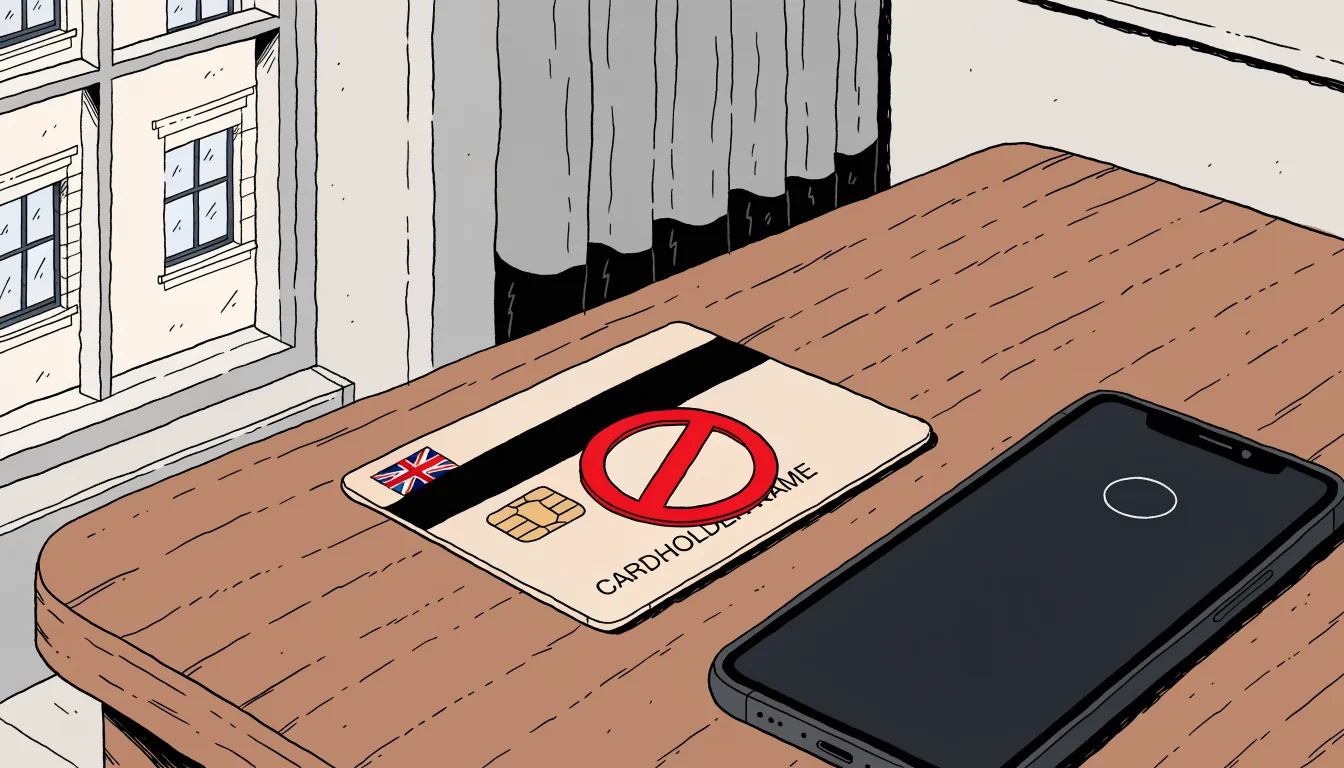
UK rules prohibit credit-card gambling deposits, while wallet use, alternative payment methods and withdrawal policies each have their own conditions.
Why UK-Licensed Casinos Do Not Take Credit Cards
Credit cards are not an accepted way to fund gambling at a UK-licensed casino. The ban took effect on 14 April 2020, and the regulator has not relaxed it. For remote gambling licensees, that means a credit-card payment cannot be accepted for a gambling deposit, regardless of which casino game the account is used for.
The restriction is a regulatory requirement, not a voluntary payment preference. A casino’s cashier may show several ways to pay, but its payment options must operate within the rules for the British market. A credit card does not become permissible because the operator is based elsewhere: remote gambling licensees selling into the market must hold a UK Gambling Commission licence and follow its requirements.
The policy addresses the risk of gambling with borrowed money. Credit allows spending to exceed funds already available in a bank account, while losses can leave a balance to repay. Preventing credit-card payments for gambling removes that particular route to borrowing. It does not remove the financial risk of gambling, but it sets a clear boundary around how licensed operators may accept funds.
The practical answer to whether credit cards are allowed for gambling in the UK is therefore no at UK-licensed casinos. This applies to credit-card payments made directly and is not a matter that an operator can waive through its own terms. A site cannot make an otherwise prohibited payment acceptable simply by describing it as a special cashier option.
A claim that a casino “accepts credit cards” needs careful reading. It may refer to another market, a card product that is not a credit card, or an operator outside the UK regulatory system. Those are different situations, with different consequences. For a casino serving customers in Great Britain, the relevant test is whether it holds the required UKGC licence and complies with the credit-card gambling ban—not whether a payment logo appears in an advert.
Casinos That Accept Wirecard in the UK: Payment Guide
The distinction matters because an offshore casino may be accessible from the UK without being licensed here. It does not operate under the UKGC system, and its payment claims do not establish that it is a legal UK casino. Online gambling is legal in the UK only through licensed and regulated sites; for operators serving Great Britain, the required licence is issued by the Gambling Commission. The Gambling Act 2005 governs gambling in England, Wales and Scotland, while Northern Ireland is outside that Act.
The date is fixed; the rule is not an optional condition. Any wording that suggests a UK-licensed casino can accept a credit-card deposit for gambling conflicts with the ban. A card label, promotional claim or cashier listing is not a substitute for checking what payment is actually being accepted and under which regulatory framework.
Our top casino picks for the UK
- BeOnBetBonus: 100% up to €500 + 100 FS · Payout speed: 1-3 business days
- AmunbetBonus: Join now and get 450% up to 2,700 GBP + 450 FS · Payout speed: 1-3 business days
- Revery PlayBonus: 100% up to€1,000+ 100 FS · Payout speed: 1-3 business days
- JetsetspinsBonus: 200% Bonus + 100 Free Spins + Free Royal Wheel · Payout speed: 1-3 business days
- ChanzeBonus: Slots Welcome Bonus #1 200% up to €500 · Payout speed: 1-3 business days
- BritsinoBonus: Welcome Package – Get your £2,200 + 2,000 FS · Payout speed: 1-3 business days
- DieselwinBonus: Welcome Pack 250% up to £4000 + 200 FS · Payout speed: 1-3 business days
- NightWinBonus: £900 + 400 free spins · Payout speed: 1-3 business days
- SlotoSportBonus: 500% up to £ 10 200+ 777 FS · Payout speed: 1-3 business days
What “Credit Card Casino” Means in the UK
A “credit card casino” is not a valid description of a UK-licensed casino’s gambling payment options. The label may appear on a page or in an offer, but it does not change the rule: remote gambling licensees cannot accept credit-card payments for gambling. A site serving customers in Great Britain must hold the relevant UK Gambling Commission licence, and that licence comes with the same restriction.
The distinction is between the wording used to describe a casino and the transaction it will actually process. A listing can use “credit card” to attract people comparing payment options, while the licensed cashier does not offer a credit-card deposit. A card logo on a page is not proof that every product carrying that logo can be used. The method’s eligibility depends on the card and the operator’s current cashier terms.
Why the label can be misleading
Payment pages may group card brands together or mention Visa and Mastercard without making the permitted card type clear. Those brands include products that are not interchangeable for gambling purposes. A debit card is not a credit card merely because both carry the same network logo, and a casino’s acceptance of a debit card does not mean it accepts credit-card funds.
Attention A claim that a casino accepts credit cards may be misleading. Always verify the actual payment methods in the cashier to ensure the card type is permitted.
This is why a page described as listing UK casinos that accept credit cards needs to be read as a claim to verify, not as confirmation that credit-card gambling is available. The relevant detail is the funding source the cashier will accept for the gambling transaction. If the deposit would be charged to a credit card, a UK-licensed casino cannot process it as a gambling payment.
A specialist review may list Visa or Mastercard among a casino’s payment methods, but that description does not establish current UK availability or confirm that a particular card product is eligible. The cashier is the place to check the available method and its conditions. A brand name alone leaves out the detail that decides whether the transaction is permitted.
The date in a page title does not alter this. In 2026, the UK restriction remains in force; a current-looking label cannot turn a prohibited payment into an available one.
What a card logo does—and does not—show
A Visa or Mastercard logo identifies a payment network, not necessarily the type of card being used. A casino may accept debit cards bearing one of those logos while rejecting credit cards from the same network. It may also show a method on an information page that is not available for a particular account or transaction. The cashier’s options and terms are more useful than a logo on a promotional page.
Casino Sites That Accept Jeton in the UK
The same care applies to claims about “credit card deposits”. That wording may refer loosely to card payments, without distinguishing debit from credit. For a UK-licensed casino, the distinction is essential: debit-card availability does not establish credit-card availability. If the deposit is funded by credit, the restriction still applies.
It is also not enough for a site to describe itself as licensed or to display payment branding. Online gambling is legal in the UK only through licensed and regulated sites, and remote gambling licensees serving Great Britain must hold the relevant UKGC licence. An offshore operator does not become a UK-licensed casino by accepting customers from the country or by advertising a familiar card brand.
“Best” does not mean permitted
A ranking of supposed credit-card casino sites in the UK cannot make credit-card gambling lawful at a UK-licensed operator. The decisive questions are whether the casino holds the required UK licence and whether the payment method is permitted for gambling—not how a page ranks the site or describes its cashier.
A licensed casino may offer other card-based deposits, but it cannot accept a credit-card payment for gambling. So a comparison labelled “best credit card casinos” is not a reliable way to identify legal credit-card deposits. At most, its wording may be using “card” imprecisely, referring to debit-card options, or describing a site that does not operate under the UK licensing system. Those possibilities are materially different and should not be collapsed into one category.
The UK credit card ban is a regulatory requirement by the Gambling Commission and is not an optional policy for licensed operators.
The restriction also applies to slot play. A credit card does not become an acceptable payment method because the intended game is a slot rather than another casino game. The rule concerns credit-card payments for gambling, not a particular game category.
Nor does adding “not on Gamstop” resolve the payment question. A label about self-exclusion status does not establish that an operator holds a UKGC licence, and it does not create an exception to the credit-card restriction. A site operating outside the UK regulatory system is not a UK-licensed casino; its payment claims should not be treated as evidence of what a licensed UK casino may accept.
The practical test
The phrase “credit card casino” is therefore a poor guide to the actual payment terms. For a UK-licensed casino, the relevant distinction is between credit and debit funding, not between Visa and Mastercard branding. A specialist review that names those networks may help identify what to check, but it cannot confirm the current eligibility of an individual card product. That needs to be established in the casino’s cashier.
If the cashier lists a card method, its exact type and conditions matter. A card logo does not prove that a credit card can be used, and a debit card’s acceptance does not imply that a credit card from the same network is accepted. Where the description is unclear, the claim should not be read as permission to deposit credit-card funds.
Casinos That Accept Citadel in the UK: How to Check
The headline phrase may persist because “credit card casino” is a familiar way of describing a payment search. In the UK, it does not identify a lawful category of casino deposit. The workable interpretation is narrower: some UK-licensed casinos may support eligible debit cards, while credit-card payments for gambling remain unavailable under the rule.
Can a Credit Card Fund a Casino Deposit Through a Wallet?
A wallet does not make a credit-card-funded casino payment acceptable. For UK gambling, the restriction applies to the route the money takes, not just to the label shown in the casino cashier. If credit is used to put funds into a wallet and those funds are then sent to a casino, the extra step does not turn the transaction into a permitted deposit.
That distinction matters because a wallet can hold money from different sources. A balance funded from a bank account or debit card is not the same as one funded with a credit card. The payment route must be assessed by its underlying funding source, rather than by the fact that the casino receives money from a wallet provider.
The ban on credit-card gambling took effect on 14 April 2020 and has not been relaxed. It covers indirect routing through a money service business as well as a direct credit-card payment to a gambling account. A payment intermediary is not a loophole: changing the interface between the card issuer and the casino does not change the purpose of the funds.
Warning Using a wallet to route credit funds to a casino does not bypass the UK restriction. The source of the funds is what matters.
For the same reason, a wallet should not be treated as a workaround simply because its name appears as a separate option in a cashier. If that wallet permits credit-card funds to be used for gambling, a UK-licensed casino cannot accept the payment on that basis. The relevant question is whether the money being used for the gambling transaction originated as credit-card funds—not merely whether the final transfer is technically made by the wallet.
This also explains why a card payment may fail even when a wallet account is active and can make other kinds of payments. The wallet provider, card issuer and casino may apply controls to the funding source or transaction type. A rejection is not evidence that another route through the same credit-card balance will be allowed.
The search for a way to use a credit card at an online casino in the UK therefore has a straightforward answer: not by sending the card funds through a wallet. Nor does splitting the process into a card-to-wallet transfer followed by a casino deposit alter the substance of the payment. The extra transfer changes the sequence, not the source.
A legitimate wallet deposit depends on eligible funds and on the casino’s own payment rules. A wallet balance containing money from more than one source can make the position less obvious, so the account’s funding history matters. Where the balance includes credit-card funds, presenting the payment as a wallet transfer does not make those funds suitable for gambling.
Casino Sites That Accept EcoPayz in the UK
There is no separate exception for slots. A credit-card-funded wallet balance cannot be used to pay for online casino gambling just because the intended game is a slot rather than another casino game. The payment restriction concerns gambling funds, not the game selected after the deposit.
The practical distinction is between a wallet as a payment service and a wallet as a route for credit. The first may be available for eligible funds under a casino’s terms; the second cannot be used to bypass the UK restriction. Treating the wallet name as decisive would ignore the part that matters: how the money was funded.
Which Payment Methods Can Replace a Card Deposit?
A UK-licensed casino can offer several ways to deposit without a credit card. The practical choice depends on whether the method is available at that operator, whether it suits the intended transaction and whether its terms affect bonuses or withdrawals. A payment logo alone does not settle those points; the cashier’s current options and the relevant terms do.
Debit cards
Debit cards are the closest substitute for a card deposit. UK casinos commonly accept Visa and Mastercard debit cards, with the money taken from the linked bank account rather than borrowed through a credit facility. Card acceptance can still depend on the operator, the issuer and the particular card product, so the cashier determines whether a specific card can be used.
DO
- Use debit cards bearing Visa or Mastercard logos
- Check the cashier for current available methods
- Verify that account holder details match
DON’T
- Use credit cards for gambling deposits
- Rely solely on a card logo shown on promotional pages
- Assume a deposit method is also available for withdrawals
A debit card is straightforward when the account holder’s details match the casino account and the card is accepted for the transaction. That does not make it interchangeable with every other card product, nor does deposit acceptance by itself establish how a withdrawal will be handled. The deposit route and payout route are separate points to confirm.
Bank transfers and open banking
Bank transfers and open banking provide another direct route from a bank account. They may allow instant deposits, and some sites also support fast withdrawals through these services. A specialist review describes those speeds as available at many sites, rather than as a feature of every casino or transaction.
The distinction between a bank transfer and an open-banking payment can matter at checkout: the available service may depend on the operator’s payment setup and the customer’s bank. Bank transfer delivery can also be affected by processing cut-off times, weekends and currency conversion. A displayed deposit option therefore indicates a possible route, not a fixed completion time.
E-wallets
PayPal, Skrill and Neteller are examples of e-wallets that may be available at casino sites. Availability is operator-specific. Skrill and Neteller are offered at some sites, while a specialist review notes that they are often excluded from promotions. Bonus eligibility should therefore be checked against the casino’s terms before an e-wallet deposit is made; the payment method can change the offer attached to the transaction.
PayPal is valued for speed and convenience, but a specialist review also flags that it may not qualify for bonuses. That is a possible condition, not a universal rule. The payment page and promotion terms need to be read together: a deposit can go through while remaining ineligible for a particular offer.
Casinos That Accept Mastercard UK: Debit Card Rules
An e-wallet is not automatically suitable simply because it appears in the cashier. Its funding route and the casino’s rules still matter, as do the terms for moving funds back out. Deposit availability should not be mistaken for a promise about withdrawal support or bonus treatment.
Prepaid vouchers
Paysafecard is a prepaid voucher option, but it is deposit-only. It can be used to add funds where the casino accepts it; it is not a route for receiving a payout. That makes it materially different from a bank-linked method or an e-wallet that may support both sides of a transaction.
A deposit-only voucher can suit a player who wants to pay from prepaid funds, but it leaves the withdrawal process to another method if winnings are to be paid out. The casino’s cashier and payment terms determine which alternatives are available and whether additional checks are needed. The deposit method alone does not define the full payment arrangement.
Comparing the routes
| Method | What it can do | Point to check |
|---|---|---|
| Debit card | Deposit from a linked bank account | Whether the casino accepts the particular card product |
| Bank transfer or open banking | Deposit; some services can also support withdrawals | Availability, processing conditions and currency handling |
| E-wallet | Deposit at sites that offer the service | Bonus eligibility and withdrawal support |
| Paysafecard | Deposit only | Which alternative method is used for withdrawals |
For anyone comparing online casinos that accept credit cards in the UK, the useful distinction is between the wording used to describe a site and the actual payment methods in its cashier. At a UK-licensed casino, the workable alternatives are debit cards, bank-linked payments, eligible e-wallets and, where offered, deposit-only vouchers. Their availability and terms vary by operator; none should be treated as a universal replacement with identical deposit, bonus and withdrawal conditions.
Deposits, Withdrawals and the Original Payment Source
A payment method that accepts a deposit does not necessarily provide a route for cashing out. Casinos may allow a particular service for incoming funds while requiring winnings to be sent elsewhere, or may not support withdrawals through that service at all. The cashier’s deposit list therefore cannot be treated as a complete guide to payout options.
For UK customers, the starting point is the original payment source. Anti-money-laundering controls commonly require a casino to return funds to the method used to pay in. This closed-loop approach helps establish where the money came from and where it is going; it also means that choosing a deposit method can shape the later withdrawal process.
In practical terms, a deposit made from a card may be subject to a return-to-source check even if the card payment was processed immediately. If the original route cannot receive the payout, the casino may need to use an alternative method and request further checks before releasing funds. That can add administration rather than remove it. The relevant question is not only whether a method appears in the deposit cashier, but whether the operator can send withdrawals to it and what happens if it cannot.
Casinos That Accept Upaycard in the UK
Why the same method may not work both ways
Payment providers do not all handle incoming and outgoing transactions in the same way. A service can be deposit-only, or a card issuer or provider may not support a particular type of refund or payout. Where a casino cannot return the balance to the original source, it may ask for another payment route. That alternative can trigger additional verification, especially if the account holder or destination details do not match the original transaction.
Using an account and payment route registered to the same person helps keep basic ownership details aligned. It does not remove KYC requirements or guarantee a particular payout route, but it can avoid an obvious mismatch that would otherwise need explaining. A third party’s card or wallet introduces a different owner into the transaction record, making the source and destination less straightforward to reconcile.
The casino’s own terms determine how it handles partial refunds, multiple deposit methods and cases where the original source is unavailable. A payout may be split across previously used methods, or the operator may request bank details for a verified account in the customer’s name. These are not interchangeable assumptions: the stated policy and the options displayed in the cashier govern the actual route.
Why withdrawal methods vary
Casinos may allow a specific service for incoming funds while requiring winnings to be sent elsewhere, or may not support withdrawals through that service at all.
Deposit speed is not payout speed
An instant deposit confirms only that money reached the gambling account promptly. It says nothing about the time needed to approve a withdrawal or deliver it to a bank or payment provider. A specialist review of casino payment terms notes that a card payment can arrive instantly while a payout may take several business days. Those are separate stages, not two sides of one transfer.
A withdrawal generally passes through the casino’s internal approval before the payment provider processes it. First withdrawals can take longer when identity or account checks are still being completed. Verification may include confirming the customer’s identity and checking ownership of the payment method; incomplete KYC can therefore delay approval even where the chosen payout method itself is fast.
After approval, delivery time depends on the receiving method and its processing. Bank transfers can be affected by cut-off times, weekends and currency conversion, while a provider may have its own processing steps. The casino’s displayed estimate should be read as a process with more than one stage: internal review first, payment delivery afterwards. A fast deposit is not evidence that either stage of a withdrawal will be equally fast.
What to establish before depositing
Before making a payment, the useful checks are specific:
- whether the method supports withdrawals as well as deposits;
- whether payouts are returned to the original source or can be sent to another verified route;
- which account-holder details must match;
- whether KYC is complete and what documents may be requested;
- how the casino separates approval time from payment-delivery time.
This matters particularly when a balance is funded through more than one method. Each deposit can create another source to reconcile, and the casino may apply its return-to-source controls before paying out the remaining balance. If an initial deposit was made by one route and later funds by another, the withdrawal policy may specify an order or require confirmation for each source.
A casino’s payment page may show a method for deposits without setting out every withdrawal condition beside it. The account terms and cashier should be checked together, because a method label alone does not establish payout eligibility. Where the operator offers a different withdrawal route, it may require proof that the destination account belongs to the same customer.
The practical distinction is simple: deposit availability concerns getting funds into the casino account; withdrawal eligibility concerns how funds leave it, after approval and any required checks. Treating them as one feature can leave a balance dependent on a route that is slow, restricted or unavailable for payouts. Payment choice is therefore part of the withdrawal plan, not merely a decision made at the deposit screen.
Payment Compatibility, Limits and the Cost of a Transaction
For UK-licensed casinos, a cashier’s payment list is not permission to use a credit card for gambling. The relevant checks concern a lawful method’s availability, direction and terms. A method shown for deposits may not also be available for withdrawals, so each function needs confirming before it is treated as a complete payment route.
Casinos That Accept eCheck in the UK: Payment Guide
Check the account currency before the first transaction. GBP is supported on the casino pages examined in a specialist review, but the currency attached to an individual account still needs confirmation. If the account and payment method use different currencies, conversion may add a cost at the exchange rate applied to the transaction.
The deposit screen should state the minimum and maximum for the selected method. These figures can differ by payment route and account status, and maximums may apply per transaction or across a stated period. A limit shown for one method should not be assumed to apply to another; the cashier’s current terms determine the usable amount.
The visible casino charge is only one possible cost. Payment-provider and issuer or bank fees may apply, alongside an exchange-rate spread or network fees. A specialist review notes that there is no single payment method that can be labelled cheapest in every case. The comparison has to use the intended transaction amount and include each applicable charge. A conversion spread can outweigh a flat fee, so the headline fee alone is not the final cost.
A practical comparison therefore records four terms for each method: deposit and withdrawal availability, account currency, transaction limits, and total charges. Where any of these differs between the cashier and the provider, the final amount received or charged can differ from the amount entered.
Playing Slots Without a Credit Card
A credit card is not an eligible way to fund slot play at a UK-licensed casino. The restriction applies to gambling payments, not only to table games or bets on sports. A slot deposit made with a credit card therefore cannot be treated as an acceptable route simply because the game is digital or the payment is processed quickly.
The regulator’s ban took effect on 14 April 2020 and remains in force. It covers remote gambling by credit card, so UK-licensed casinos cannot accept one for real-money slots. A cashier displaying card logos does not by itself mean every card product is permitted: Visa and Mastercard also issue debit cards, and the card type matters. The payment option and the eligible product need to be clear before a deposit is attempted.
For slot play, the practical distinction is between a credit card and a permitted payment method, not between different kinds of casino game. A debit card may be offered, but it is not a credit card; the cashier’s terms determine whether that specific card can be used. A payment route should not be assumed to qualify merely because it starts with a card or passes through another service. Credit-card funds cannot be routed into gambling through a wallet or money service business to avoid the restriction.
This also affects how a casino’s marketing should be read. A page describing a site as a credit-card casino does not override the rules that apply to a UK-licensed operator. The phrase may reflect a broader international offer, an outdated description or loose wording; it does not establish that credit-card slot deposits are available to UK customers.
The answer to whether slots can be played with a credit card at a UK-licensed casino is no. Slot access and payment eligibility are separate questions: a game can be available while the proposed funding method is not. A compliant deposit must use a route the operator permits for gambling, rather than a credit-card payment relabelled at checkout.
Why must withdrawals return to the deposit method?
Returning funds to the original payment source is a common anti-fraud and anti-money-laundering control. Using the same named account for deposits and withdrawals can also reduce avoidable transaction delays.
What is the fastest withdrawal method for UK casinos?
PayPal, open banking services, and debit cards linked to fast payout systems are generally among the quickest options. The casino’s approval process and whether your account is fully verified also affect how quickly you receive funds.
Do UK casino withdrawals require verification?
Verification may be completed before a first withdrawal, and payouts can take longer while checks are carried out. Keeping your account fully verified can help avoid delays.
Can I use a credit card at 333 Casino in Great Britain?
No, a UK-licensed casino cannot accept credit-card payments for gambling in Great Britain. A debit card may be accepted, but the cashier must confirm which card products are eligible.
Why can a fast payout casino still delay my withdrawal?
A fast payout method does not bypass the casino’s internal approval process. Withdrawals can take longer if verification is still pending, and bank transfers may also be affected by cut-off times and weekends.
Payments
Casinos That Accept ClickandBuy in the UK
ClickandBuy listings can be outdated, so a live cashier is the relevant check; the article also covers alternative routes and payment conditions. ClickandBuy Availability at UK Casinos in 2026 ClickandBuy…
Casinos That Accept Bank Transfers in the UK
Bank-transfer options can use different services and processes, so payment terms and…
UK Casino Sites That Accept Debit Cards: How to Check
Understand how card eligibility, casino payment routes and account safeguards affect deposits…
Casinos That Accept Bitcoin in the UK: Evidence and Checks
The available evidence does not verify a UK Bitcoin casino shortlist, so…
Published by the StakeVault team.