
Casinos That Accept eCheck in the UK: Payment Guide
 Available in GB
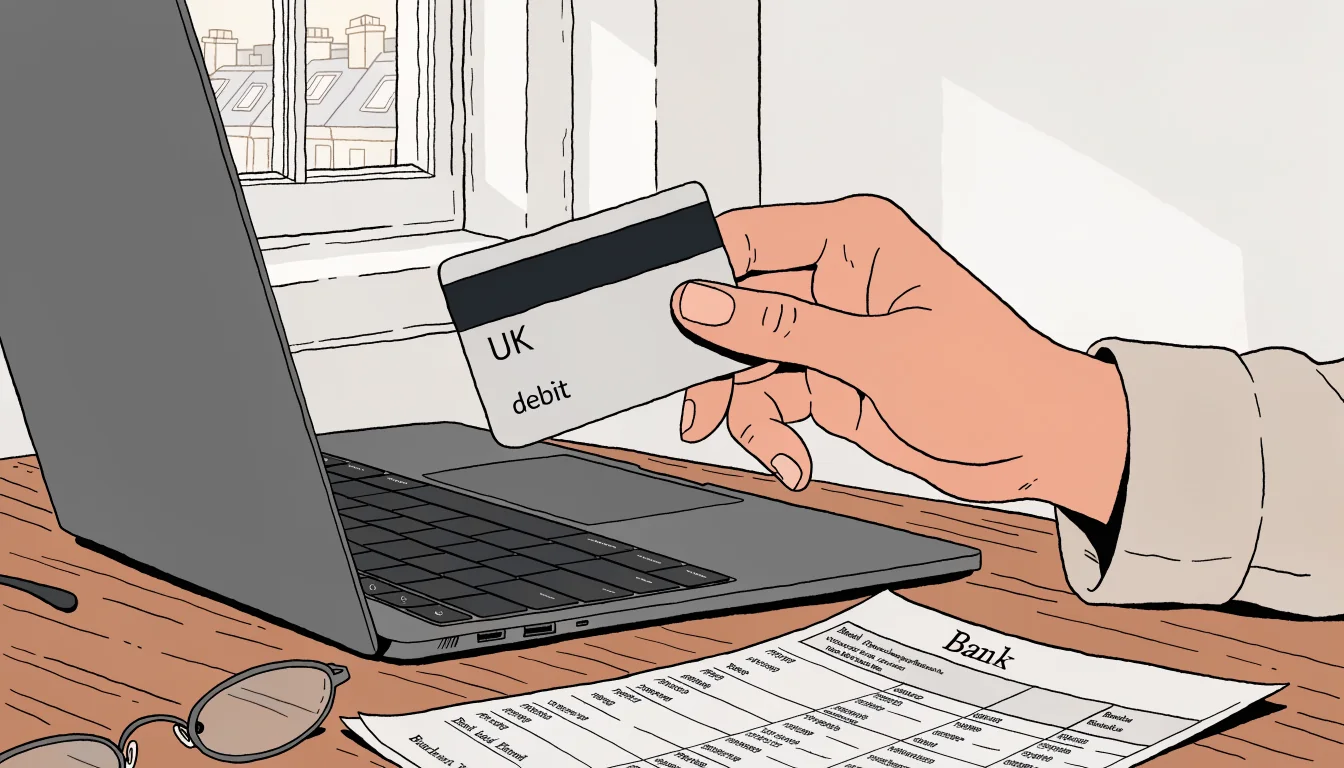
The eCheck label alone does not confirm a distinct UK casino payment method or show how deposits and withdrawals are processed.
What “eCheck” Means for UK Casino Payments
“eCheck” is not a sufficiently precise label to identify a payment option at a UK casino. It may be used loosely to describe an electronic payment drawn from a bank account, but that does not establish which service processes it, how a casino displays it, or whether it is available to a particular account. The name alone is not evidence that a cashier offers a distinct method called eCheck.
That distinction matters because a bank-linked payment can appear under another name. A cashier may identify a route as a bank transfer or an open-banking service, for instance, rather than as an eCheck. Those labels should not be treated as interchangeable without details from the casino or payment provider that connect them. A bank account being usable for transfers does not, by itself, confirm support for a particular electronic cheque service.
The available UK payment information identifies familiar categories: debit cards, bank transfers, open banking and e-wallets. It does not establish a standard UK casino method branded “eCheck”. That is a limit on what the label confirms, not proof that no casino could use it. A site may use terminology that differs from the broader market vocabulary, or a provider may describe its bank-account route differently. The practical distinction is between a recognisable payment name in the cashier and an assumption based on a similar-sounding banking function.
Debit cards offer a useful comparison because the category is clearer. UK casinos commonly accept debit cards, including Visa and Mastercard, but that does not make every card product or every casino compatible. Specialist casino reviews that list those brands should be read as a starting point, not confirmation of present availability: current UK access and card-product eligibility need to be checked in the casino cashier. A brand name identifies a payment network, not a guarantee that every card bearing it will work.
Casinos That Accept E-Cheques in the UK: What to Check
Bank transfers and open banking are also relevant to the terminology question, but they should not be collapsed into “eCheck” automatically. A specialist casino review has described open banking and bank transfers as routes that can support instant deposits and fast withdrawals at many sites. That is a report about those named routes, not confirmation that they are eChecks or that a particular casino presents them under that name. The category must stay attached to the evidence; otherwise, a general reference to bank payments becomes an unsupported claim about a specific product.
A useful way to interpret “eCheck casinos UK” is therefore to separate three things: the payment mechanism, the service or provider name, and the label shown by the casino. The mechanism may involve money moving from a bank account electronically. The provider may supply an open-banking connection or a transfer service. The casino may show a branded option, a bank-payment category, or no matching route at all. Similarity between any two of these does not establish identity across all three.
Casinos That Accept Tether in the UK: Payment Guide
This also explains why a list of casinos said to accept eCheck needs careful wording. If a list names a casino but does not identify the cashier label or provider, it may be grouping together different bank-based methods under an informal umbrella. That can make the list appear more definite than its evidence. For a payment route to qualify as eCheck in a meaningful sense, the casino or the provider would need to describe the route that way; a generic “bank payment” label is not enough to settle the question.
The distinction is especially important when the phrase “eCheck deposit” is used. A deposit from a bank account may be electronic without being processed as an electronic cheque product. Conversely, a payment provider might use a specific eCheck service that is not visible under that exact wording in a casino’s general payment information. The terminology has to be tied to the actual route, rather than inferred from the source of funds.
For UK players, the defensible answer is narrow: familiar bank-based payment categories exist, and debit cards are commonly accepted, but the term eCheck does not identify a confirmed, standard casino payment option on its own. A casino may accept a route that someone describes informally as an eCheck, yet that description needs confirmation from the operator or provider. Until then, “eCheck” is a search label, not a verified method name.
Terminology such as "eCheck" may be used loosely to describe electronic payments from a bank account, but it does not necessarily confirm a specific branded service is available.
A careful comparison should preserve that uncertainty instead of treating every bank transfer, open-banking option or debit-card payment as equivalent. Those methods have identifiable names and may appear in UK casino cashiers; whether one is an eCheck depends on the specific service and its stated terminology. Without that link, a claim that a casino accepts eCheck is more confident than the available description allows.
Our top casino picks for the UK
- BeOnBetBonus: 100% up to €500 + 100 FS · Payout speed: 1-3 business days
- AmunbetBonus: Join now and get 450% up to 2,700 GBP + 450 FS · Payout speed: 1-3 business days
- Revery PlayBonus: 100% up to€1,000+ 100 FS · Payout speed: 1-3 business days
- JetsetspinsBonus: 200% Bonus + 100 Free Spins + Free Royal Wheel · Payout speed: 1-3 business days
- ChanzeBonus: Slots Welcome Bonus #1 200% up to €500 · Payout speed: 1-3 business days
- BritsinoBonus: Welcome Package – Get your £2,200 + 2,000 FS · Payout speed: 1-3 business days
- DieselwinBonus: Welcome Pack 250% up to £4000 + 200 FS · Payout speed: 1-3 business days
- NightWinBonus: £900 + 400 free spins · Payout speed: 1-3 business days
- SlotoSportBonus: 500% up to £ 10 200+ 777 FS · Payout speed: 1-3 business days
Checking Whether a Casino Cashier Supports the Payment Route
A payment logo on a casino page is not enough to establish that a route can be used for a particular account. The cashier is the relevant place to confirm availability: it shows the methods the operator currently presents for the account and transaction being made. A method mentioned in general payment information may be absent from the cashier, or may appear for deposits without being offered for withdrawals.
That distinction matters when looking for an eCheck online casino in the UK. “eCheck” can describe different bank-linked payment arrangements, and the label alone does not confirm that a casino supports the route. If the cashier names a specific service, that is more useful than a broad statement about bank payments. If it does not identify an eCheck option, a bank-transfer button should not be treated as equivalent without confirmation from the operator.
The cashier is also more specific than a site-wide list because payment availability can depend on the account and the transaction type. A method may be displayed only after sign-in, or the available choices may differ between the deposit and withdrawal screens. A payment route advertised on a general page therefore establishes neither that it is enabled for every customer nor that it works in both directions.
Casinos That Accept Ethereum in the UK: Payment Guide
Check deposit and withdrawal separately
Deposit and withdrawal options should be assessed as separate capabilities. A method shown at the point of deposit confirms only that the cashier is offering it for that deposit. It does not establish that the same method can receive a payout. The withdrawal screen, the cashier’s method terms or direct confirmation from the operator are needed to establish the return route.
This is particularly relevant when a casino uses a payment provider or bank connection with more than one function. The name can appear in the deposit process while withdrawals are handled by a different route. A deposit option is not a promise of a matching withdrawal option; the distinction is operational, not semantic.
Before treating an eCheck route as a usable payment choice, the account should therefore show the method where it is needed. If the route appears only in the deposit list, its withdrawal status remains unconfirmed. If it is absent from either relevant screen, an operator’s answer should specify whether the limitation applies to the account, the transaction type or the payment product itself.
Match the account and payment details
Compatibility is not only a matter of whether two systems connect. Basic account ownership details also matter. Using casino account information and a payment route belonging to the same customer reduces the risk that an avoidable mismatch will interrupt a transaction. The clearest arrangement is one named payment account used consistently for both deposits and withdrawals, where the cashier supports that route in both directions.
Do
- Check the specific cashier labels in the casino
- Use payment accounts that match your casino account name
- Verify both deposit and withdrawal availability separately
Don’t
- Assume an eCheck label is a verified, standard method
- Treat a bank transfer button as an equivalent to eCheck without confirmation
- Use a payment account belonging to another person
A route attached to another person’s account creates a different ownership picture from the casino account. Even where a payment screen accepts the details, that does not make the route a suitable match for the customer’s own casino account. The method should be assessed by both its name and whose account it represents.
This does not require assuming that every cashier will apply identical checks. It means that compatibility should be judged against the actual account details and the specific route shown, rather than a payment brand in isolation. A route that appears technically available can still be a poor fit if the ownership information does not align.
Read the cashier as a set of conditions
A useful check records three things: whether the method is listed for deposits, whether it is listed for withdrawals, and whether the payment account belongs to the same customer as the casino account. These are separate points. Confirming one does not settle the others.
Where a method is described only as “bank payment” or “bank transfer”, the wording may not identify the underlying arrangement as an eCheck. The operator can clarify the payment rail and whether it is supported for both transaction types. That clarification should be specific enough to distinguish an eCheck service from another bank-linked option; otherwise the label remains too broad to establish compatibility.
A comparison of casinos should not rank them by an eCheck logo or a general payment list alone. The relevant evidence is the method presented in the signed-in cashier, its availability on both deposit and withdrawal screens, and its fit with the customer’s own account details. That standard may produce a shorter list than a marketing page, but it is a list based on an actual route rather than a label.
Casinos That Accept Boku in the UK: Current Options
Deposit and Withdrawal Terms: Limits, Timing and the Return Route
An eCheck label alone does not establish how much a casino will accept, how quickly a withdrawal will be processed or where a payout can be sent. Those terms depend on the payment route offered for the account and the casino’s rules for that route. The cashier’s displayed limits and the withdrawal terms are therefore more useful than a general description of eCheck casino deposits in the UK.
Minimum and maximum deposits
A specialist review of UK casino payment terms puts the minimum deposit at £10–£20, with the exact figure depending on the method selected. That range is a guide to the terms reported by that type of source, not a guaranteed threshold for every account or payment option. The amount shown in the cashier at the point of deposit is the operative minimum.
Maximums need separate attention. A casino may set a cap for one transaction and different caps for deposits made across a day or month. The applicable maximum can vary with the payment method and account status, so a limit listed for one route should not be carried over to another. Where the account shows a lower maximum than the published general terms, the lower figure is the practical constraint for that transaction.
The distinction matters when several deposits are planned. A per-transaction cap does not describe the overall amount accepted across a longer period, while a daily or monthly cap does not necessarily prevent a smaller individual deposit. Each limit should be read with its measurement period and payment route attached. Without that, comparing headline figures is not a reliable comparison of available funding capacity.
Attention A limit listed for one payment route is not evidence of the terms for another; always check the specific amount shown in the cashier for your selected method.
The same care applies to an eCheck route. A payment method’s name does not establish its minimum or maximum, and a limit shown for a different bank or wallet option is not evidence of the terms for eCheck. The relevant amount is the one presented for the selected route in the account cashier.
Withdrawal processing and settlement
A withdrawal involves more than the time taken by the payment network. The casino must first review and approve the request; only after that stage can the funds proceed through the payment route. A specialist review of withdrawal procedures notes that the processing period can include this internal approval, and that a first withdrawal may take longer while the account is being verified. An estimated delivery time should therefore be read as a sequence of stages, not as a promise that the casino will release funds immediately.
Once approved, delivery can still depend on the receiving payment provider and the destination account. A casino’s stated processing period and a provider’s transfer time may describe different parts of the transaction. If the published wording does not make clear whether it covers approval, payment transmission or arrival, the total settlement period cannot be inferred from that figure alone.
For an eCheck casino withdrawal in the UK, the key point is that a deposit route does not by itself define the payout route or its timing. The terms for withdrawal need to be read separately. A route may be presented for funding while the operator’s withdrawal rules direct funds elsewhere, or require an additional step before a different destination can be used. Deposit speed is not a measure of payout speed; the two transactions pass through different approval and settlement stages.
Casinos That Accept USDC in the UK: Payment Guide
A pending withdrawal can also reflect an unfinished approval process rather than a delay at the receiving bank. The distinction is practical: before approval, the casino controls the next step; after release, the payment provider or banking route may control delivery. The status displayed in the account and the operator’s withdrawal terms help identify which stage is still in progress.
Return to the original payment source
UK anti-money laundering rules usually require a payout to return to the original payment source. This is commonly implemented as a closed-loop rule: funds deposited through a particular source are returned to that source where the route supports withdrawals. It is a control on the destination of funds, not a guarantee that every payment method can receive a withdrawal.
If a different destination is proposed, the casino may require additional verification before it processes the payout. That can add a review step and change the expected settlement path. A player should not assume that a bank account, card or e-wallet can be substituted simply because it belongs to the same person; the operator’s rules still determine whether the alternative is accepted.
Where deposits have used more than one source, the casino’s terms may govern how a withdrawal is allocated between them. The return route should be checked against the payment history and the operator’s stated process, rather than inferred from the last deposit alone. If a route is deposit-only, it cannot serve as the destination for a withdrawal, even when it was accepted for funding.
The Full Sequence
Evaluating a payment requires checking the minimum, maximum, approval time, delivery route, and return-to-source rules.
For a prospective eCheck deposit, the useful comparison is therefore not just the amount accepted at the start. It is the full sequence: the minimum shown for that method, any transaction or period-based maximum, the casino’s approval stage, the expected delivery route and the rule for returning funds. If any part of that sequence is unclear, the deposit amount alone does not establish the terms of a later payout.
Comparing Casino Payment Costs in Pounds
A deposit or withdrawal has a cost only after every deduction is counted. A cashier may show no charge while a payment provider, card issuer or bank applies its own fee. If the transaction crosses currencies, the exchange rate can also reduce the pounds received or increase the pounds paid. For some routes, network fees are another part of the total.
A useful comparison starts with the amount leaving the account and the amount credited by the casino. For a payout, the calculation runs in reverse: compare the casino balance deducted with the pounds that arrive. The difference is the total transaction cost, whether it appears as a named fee or is built into the rate.
Separate visible charges from exchange costs
The casino’s payment terms establish whether it adds a charge. The provider’s terms may set a separate fee, while a bank or card issuer may apply its own charge. Those costs should be kept distinct rather than treated as one casino fee: the party imposing a deduction determines where the relevant terms must be checked.
Casinos That Accept Click2Pay in the UK: What to Know
Currency conversion needs a separate calculation. A casino account denominated in pounds avoids one possible conversion at the casino stage, but it does not prove that the payment account or provider will also process the transaction in pounds. The account currency should be confirmed before the first transaction. A specialist review reports that GBP is supported on the pages it examined; the actual account setting still needs checking.
Where conversion occurs, compare the rate used with the rate available for the same transaction. The gap is the exchange-rate spread. It may cost more than a clearly stated flat fee, so a route advertised as fee-free is not necessarily the lower-cost route. “No fee” answers only whether a particular fee is charged; it says nothing by itself about the exchange rate.
Network costs should also be included where they apply. This is relevant to routes that use a payment network, including cryptocurrency transactions, but the existence and amount of any charge depend on the route and transaction. A comparison that excludes this cost is incomplete.
Compare the same amount and direction
Fees can differ between deposits and withdrawals, and the total can change with the amount transferred. A fixed charge takes a larger share of a smaller transaction; a percentage-based charge scales with the amount. If both apply, add them before comparing routes. Then include any conversion spread and network cost.
For a pound-denominated deposit, the working is:
amount paid from the funding account − casino fee − provider, issuer or bank fees − conversion cost − network cost = amount reaching the casino
For a payout, use the amount removed from the casino balance as the starting point and subtract charges and conversion costs to find the pounds received. The result should be calculated for the intended amount, not inferred from a general label such as “free”, “low cost” or “instant”. Speed does not establish price.
Total Cost Calculation
Step 1: Calculate the amount sent
Start with the amount paid from the funding account and subtract the casino fee, provider/bank fees, conversion costs, and network costs.
Step 2: Determine the arrival amount
The result is the total amount reaching the casino.
The same method applies when comparing a bank route, card, e-wallet or another available payment option. A route with no casino charge may still involve provider or bank costs. Another may have a visible fee but use a more favourable conversion rate. Neither can be ranked without the actual terms and currency path.
Why there is no universal cheapest route
The lowest-cost option depends on the casino’s charges, the payment provider’s fees, the exchange-rate spread and any network cost for the transaction being made. It can also depend on whether the account and payment route are already in pounds. Changing any one of those inputs can change the result.
An eCheck label does not, on its own, establish that a route is free, pound-denominated or cheaper than an alternative. The relevant comparison is the final amount paid or received after all deductions—not the method name or the cashier’s headline fee. A price comparison without the transaction amount and currency is packaging, not a calculation.
Real-Money Deposits and Financial Controls
A payment route and permission to spend are separate questions. An eCheck option, if displayed by a casino, would describe how money is transferred; it would not establish whether the account is ready for real-money play or what controls apply before funds are added. The relevant UK rule concerns the account and the first deposit, not a particular payment brand.
Remote gambling licensees must ask new customers to set a financial limit before accepting their first deposit. They must also make account-level limit controls accessible. This places a decision point before real-money funding: the customer sets a boundary, and the operator must provide a way to manage limits through the account. A cashier button alone does not satisfy that requirement.
Casinos That Accept Interac in the UK: Payment Checks
The distinction matters when assessing a casino that appears to accept eCheck deposits. Payment availability is only one part of the transaction. The account must also pass the operator’s required pre-deposit step, and the financial controls must remain available after registration. A claim that a deposit is instant cannot remove that step or determine whether the account can proceed.
A financial limit is not the same thing as a payment-method limit. The former is an account-level gambling control; the latter concerns how much a particular route will process. They may affect the same deposit, but they serve different purposes. A payment route may be technically available while the account’s financial settings prevent a deposit of that size. Conversely, a set financial limit does not confirm that a specific eCheck service is accepted.
The practical sequence is therefore account setup, financial-limit prompt, then any permitted deposit process. This order is not an optional cashier preference. The operator must prompt a new customer to set a financial limit before the first deposit. If the process presents a payment screen first, that does not change the underlying requirement.
Once the account is active, accessible controls matter because financial circumstances can change. A control that is difficult to locate is less useful than one available within the account. The UKGC requirement is about access to account-level limits, not merely a warning shown at registration. It does not, by itself, specify the values a customer must choose or imply that a chosen limit guarantees a particular gambling outcome.
Credit Card Prohibition
Credit-card gambling is prohibited in the UK, and funds from credit cards cannot be routed through other services to bypass this rule.
For real-money use, an eCheck deposit should therefore be considered alongside the account’s limit settings rather than as a shortcut around them. The payment method moves funds; the financial controls set a boundary on gambling activity. Those are separate functions, and treating them as interchangeable obscures where a restriction comes from.
Credit-card funding is another boundary. The regulator prohibited credit-card gambling on 14 April 2020, and that prohibition remains in force. A casino accepting real-money deposits cannot treat a credit card as an eligible gambling payment route. The rule is not a fee or a temporary cashier setting; it restricts the payment source for gambling.
That restriction also matters when a payment service sits between a card and a casino. Credit-card funds cannot be routed through a money service business to make a gambling payment that would otherwise be prohibited. Nor can an operator accept a wallet payment where the wallet permits credit-card funds to be used for gambling. The route’s label does not change the underlying source of the funds.
This distinction can prevent a misleading comparison. A deposit option described as a bank transfer, e-wallet or eCheck should not be judged by name alone if the account is being funded through an ineligible credit-card source. The permitted route depends on the actual funding arrangement, not just the button displayed at checkout. An eCheck label does not override the credit-card prohibition.
Casinos That Accept iDEAL in the UK: Payment Options
The financial-limit prompt and the credit-card rule address different risks. One requires a new customer to set an account-level boundary before the first deposit; the other bars credit-card payments for gambling. Neither confirms that a particular casino accepts eCheck, and neither makes a payment route instantly available. For real-money deposits, the relevant checks are the account’s required controls and the legality of the funding source, before considering the payment method itself.
Payment Security: Ownership Checks and Verification
Payment security checks establish whether the casino account and the funding route belong to the same customer. Matching names and account details reduce the chance that a transaction is delayed over basic ownership questions. A route held by someone else can create avoidable friction, even where the deposit itself has gone through.
This is relevant to eCheck casino payments in the UK because the label on a payment route does not settle who owns the underlying account. The casino may need to establish that the person requesting a payout is entitled to receive funds sent through that route. Consistent account details make that link clearer; inconsistent details can prompt further checks.
KYC also affects withdrawal handling. A payment may be submitted before the casino has completed its review, but release depends on the operator’s internal approval process and whether the account is fully verified. A specialist review describes verification status and casino approval as factors in withdrawal speed; that is a conditional observation, not a fixed timetable. A first withdrawal may therefore take longer if identity or ownership checks remain outstanding.
The useful distinction is between a payment route being technically available and the casino being satisfied that the account holder owns it. Those are separate tests. A successful deposit does not, by itself, confirm that every later transaction will pass without review.
Final Verification
- Confirm the payment method is listed for deposits
- Confirm the method is listed for withdrawals
- Verify the payment account belongs to the same customer as the casino account
- Ensure a financial limit has been set on the account
For a clean record, the casino account details and payment account should identify the same customer. That does not eliminate all checks, but it avoids a preventable mismatch at the point when funds are due to leave the casino. Any request for additional verification should be handled through the operator’s stated account process, with documents submitted only through its secure channels.
Using an eCheck Payment Route on a Casino App
A casino app is an access point to an account, not evidence that every payment option is available there. An eCheck label in a general payment description does not establish that the route appears in the app cashier, works for a particular account, or is enabled for both deposits and withdrawals. Those are separate details; the app’s payment screen is where availability for the intended transaction has to be confirmed.
The distinction matters because a mobile interface may present a different set of options from a website, or show options that depend on account details and location. A route can be absent, unavailable for a particular transaction, or require an account to be set up with a supported provider. None of those conditions can be settled by the app’s presence in an app store or by a casino’s general statement that it accepts electronic payments.
A specialist payment review listing Visa and Mastercard is not confirmation that either card is currently available to every UK customer. The cashier should show whether the specific card product is eligible for the account. The same principle applies to an eCheck route: its name and instructions need to appear in the relevant cashier flow before it can be treated as an option.
The account and payment route should also belong to the same customer. Using one named account consistently for funding and withdrawals keeps the transaction path clear and reduces avoidable mismatches. App access does not override the operator’s payment controls or turn a deposit route into a withdrawal route.
Casinos That Accept Ukash in the UK: Payment Guide
Before confirming a transaction, the useful checks are narrow: identify the payment option in the app cashier, confirm that it applies to the intended transaction, and review the displayed account details. If the route is not shown there, its availability has not been established. A casino app can provide access to payment settings; it cannot substitute for confirmation of the route itself.
What UK Casino Payment Rules Mean for eCheck Searches
An electronic payment route does not sit outside the rules that govern UK gambling. Remote gambling licensees serving customers in Great Britain must operate under the relevant Gambling Commission licence, and payment arrangements must comply with the same safeguards as other ways of funding an account. A label such as eCheck does not, by itself, establish that a route is permitted or available.
Credit-card payments for gambling have been prohibited since 14 April 2020, and the ban remains in force. It also covers credit-card funds routed through a money service business. Wallet payments cannot be accepted where the wallet permits credit-card money to be used for gambling. The distinction is about the source of funds, not simply the name of the payment service.
Casinos That Accept MuchBetter in the UK
Account controls apply before money is deposited, too. A remote gambling licensee must give a new customer the opportunity to set a financial limit before the first deposit. Limit settings also need to remain accessible through the account, rather than appearing only at registration and then disappearing into the paperwork.
These boundaries matter when assessing any electronic cheque-style payment. The relevant questions are whether the route is supported for the account, whether its funding source complies with the credit-card restrictions, and whether the casino operates within the UK licensing framework. A payment description alone cannot answer all three.
For British customers, legal online gambling is available through operators holding a current UK Gambling Commission licence. Payment acceptance does not replace that requirement, and a familiar banking label is not evidence of regulatory status. An eCheck option, where offered, remains subject to the operator’s licensing duties and the rules on permitted funding sources.
Do UK casino withdrawals require verification?
Yes. UK casinos may complete verification before approving a withdrawal, and first withdrawals can take longer while checks are completed.
Can I deposit in GBP?
Yes, GBP is supported. Confirm that GBP is set as your account currency before making your first transaction to avoid conversion.
What is the current minimum deposit?
Minimum deposits usually start at £10–£20, depending on the payment method.
Payments
Casinos That Accept Interac in the UK: Payment Checks
Interac availability can differ by market, while card support depends on the casino’s cashier and the specific card product. Interac Availability at UK Online Casinos An Interac-focused search does not…
Casinos That Accept Upaycard in the UK
Payment menus can change, so an old review or search result does…
Casinos That Accept Neteller UK: Payment Guide
Neteller availability can vary by account, so the logged-in cashier is the…
Same-Day Payout Casinos in the UK: How Timing Works
Payout timing depends on the route and on when funds reach the…
Prepared by the StakeVault editorial staff.